

Sales Intelligence and B2B Prospecting Software: Best Customization Options Side-by-Side (2026)

By Kushal Magar · May 27, 2026 · 14 min read · Last updated: September 28, 2026
Key Takeaway
SyncGTM leads for no-code customization across data, workflow, and scoring layers. Explorium.ai leads for technical teams that want API and MCP control over their data layer. Apollo is best for sequence and filter flexibility but locks you to its own data. ZoomInfo, Cognism, and 6sense are strong in their respective niches but require engineering or large budgets. LinkedIn Sales Navigator and Lusha round out the list for signal-rich and permission-focused use cases. Match customization depth to your team's technical capacity — the most flexible platform is only useful if someone on your team can configure it.
TL;DR
- Best customization for no-code teams: SyncGTM — waterfall enrichment across 75+ providers, custom signal routing, and configurable ICP scoring without engineering.
- Best customization for technical teams: Explorium.ai — REST API and hosted MCP server over 146M+ companies and 767M+ profiles, 4,000+ signals. Free trial (100 credits), then from $29.99 per credit package.
- Best filter and sequence customization: Apollo.io — 65+ contact filters, multi-step branching sequences, native CRM sync. Locked to its own data layer.
- Best enterprise API customization: ZoomInfo — REST API, custom intent topics, enterprise CRM field mapping. Starts at $15,000+/year.
- Best compliance-layer customization: Cognism — phone-verification tier control, GDPR settings per region and channel.
- Best AI model customization: 6sense — configurable buying stage taxonomy, ICP-trained predictive scoring. Enterprise-only pricing.
- Best signal and territory customization: LinkedIn Sales Navigator — custom account lists, alert configuration, TeamLink territory overlap. No enrichment API.
- Best team permission customization: Lusha — role-based access controls, custom CRM field mapping, intent topic selection.
What This Comparison Covers
Not all sales intelligence and B2B prospecting software customization options are equal. Most platforms claim to be flexible. What they mean is that you can rename a list or change your email signature.
Real customization means controlling how the platform behaves at four layers: which data sources it pulls from, what routing logic governs records, how ICP scoring weights are defined, and where enriched data gets pushed. This guide scores eight platforms across those four layers — with pricing, screenshots, and honest verdicts for each.
It is written for SDR managers, RevOps leads, GTM engineers, and sales ops teams actively evaluating their stack in 2026. For context on which platforms are most trusted for data accuracy, see our full customization breakdown for B2B lead gen brands.
The Four Dimensions of Customization
Before comparing platforms, define what customization actually means in sales intelligence. Four layers separate genuinely flexible platforms from ones that just have long feature lists.
- Data source flexibility: Can you choose which enrichment providers the platform uses — or are you locked to one proprietary database? Can you configure a waterfall priority order per field type?
- Workflow logic: Can you build conditional routing rules — "if job title is VP and company size is 200–500, route to sequence A" — without writing code?
- ICP scoring: Can you define your own ideal customer profile criteria, set custom weights, and build separate models for different GTM motions?
- Output routing: Can you push enriched data to specific CRM fields, Slack channels, or webhook endpoints? Or does the platform only export to a fixed template?
According to Gartner's research on B2B sales technology, 67% of revenue teams rebuild their tech stack within 18 months — and tool inflexibility is the primary cited reason. Platforms scoring well across all four layers are the ones teams keep for 2+ years.
A second criterion: is the customization no-code or does it require engineering? The most customizable platform is worthless if no one on your team can configure it. See our B2B sales prospecting tools guide for a broader overview of what each category of tool does.
1. SyncGTM
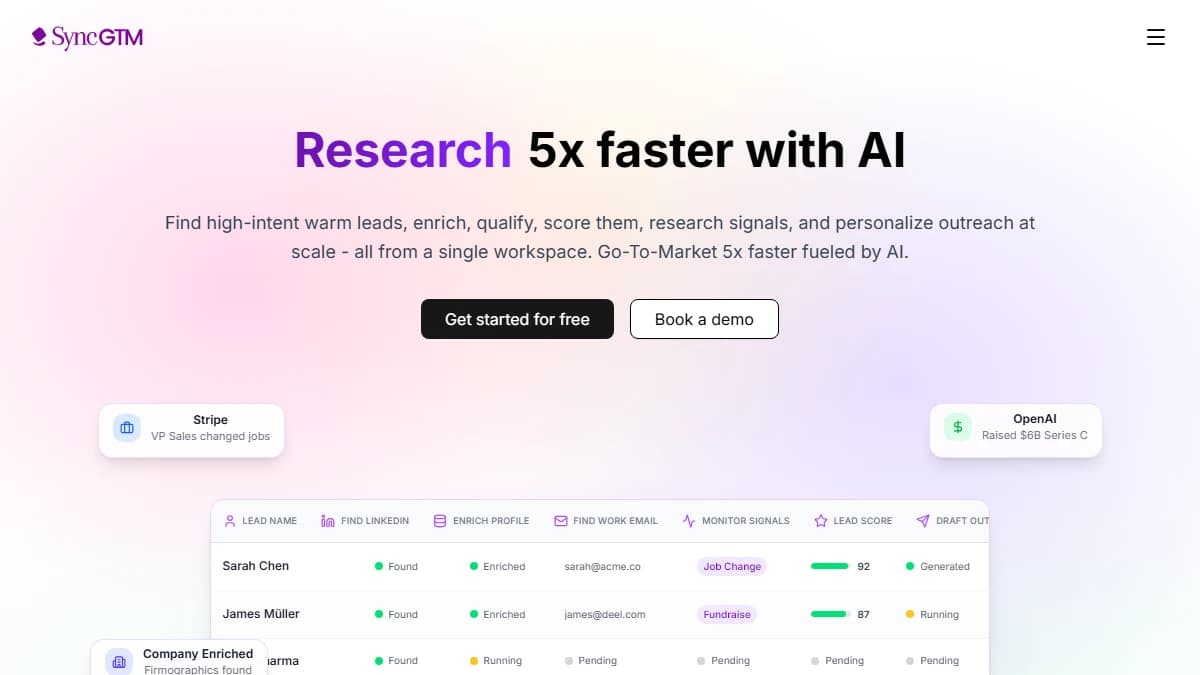
SyncGTM — waterfall enrichment and GTM automation platform built for customization without engineering overhead.
SyncGTM is a data-first sales intelligence platform purpose-built for B2B teams that need to customize their prospecting stack without hiring an engineer. Its waterfall enrichment engine spans 75+ data providers — you configure which provider runs first, second, and third for each field type (verified email, mobile phone, LinkedIn URL, company firmographics).
When Provider A returns no verified email, Provider B runs automatically. Teams configuring a 3-provider waterfall consistently achieve 85–92% contact coverage versus 40–60% from single-source tools, per SyncGTM's internal hit rate benchmarks.
Pros
- Waterfall enrichment across 75+ providers with configurable priority per field type
- Custom signal routing — define which buying signals (job changes, funding, hiring spikes) trigger sequences or CRM actions
- ICP scoring with configurable firmographic and behavioral weights — no code required
- Flat workspace pricing — all customization features available to the full team, no per-seat escalation
- Webhook and CRM output routing to any field in HubSpot, Salesforce, or Pipedrive
- Pre-built GTM templates you can fork and modify without starting from scratch
Cons
- Newer platform — fewer pre-built integrations than Apollo or ZoomInfo
- AI-driven predictive scoring is less mature than 6sense's enterprise models
Best for: B2B teams that need multi-source enrichment flexibility and custom signal routing without engineering overhead — especially teams replacing a stitched-together enrichment, Apollo, and Instantly stack.
Pricing: Flat workspace pricing. See SyncGTM pricing for current plans.
2. Explorium.ai
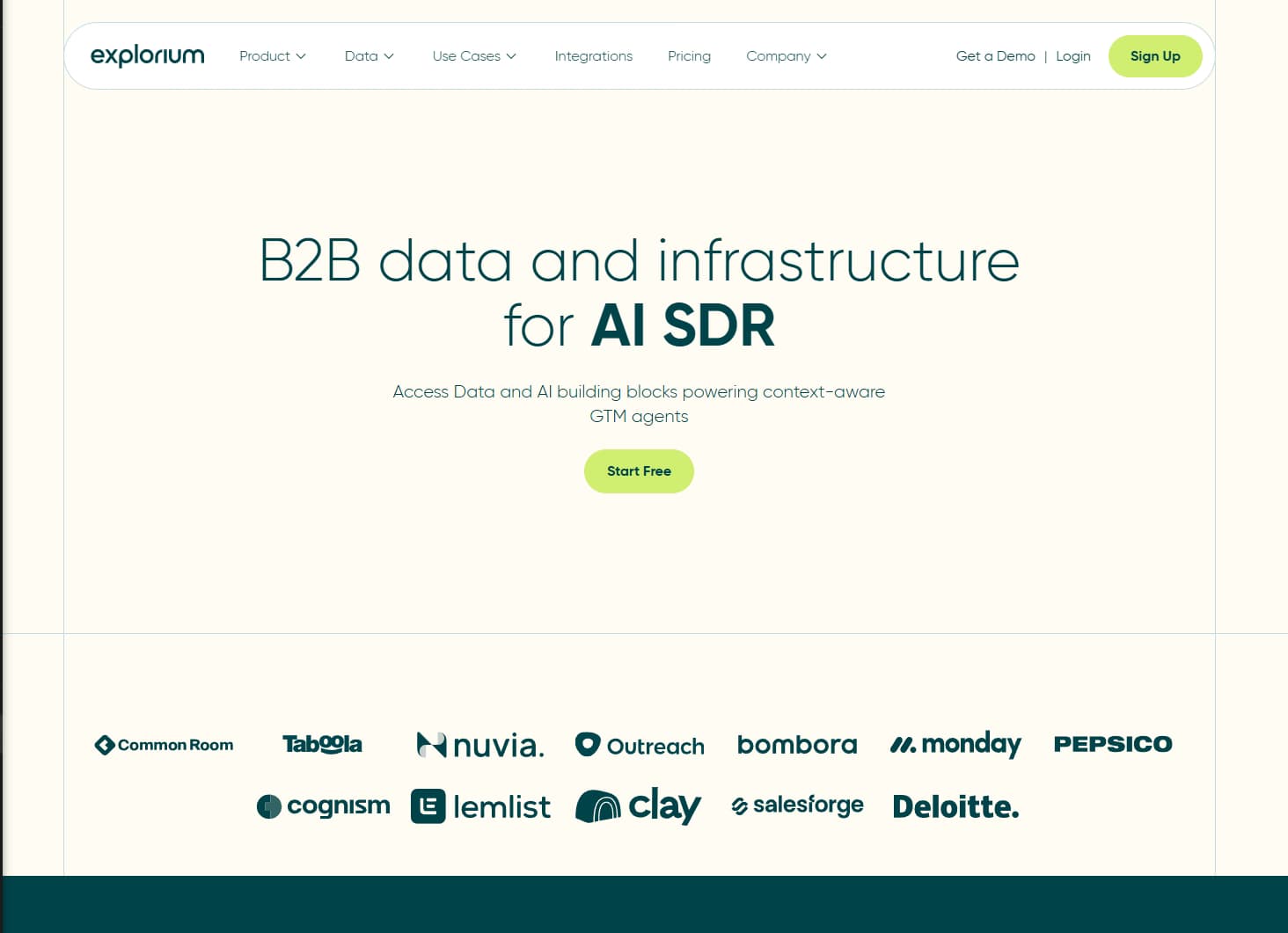
Explorium.ai — a B2B data layer that technical teams customize through an API and MCP server.
Explorium.ai is a B2B data platform built for GTM teams and AI agents, with 146M+ companies and 767M+ professional profiles drawn from 100+ data sources. Its AgentSource REST API and hosted MCP server let you choose which company and prospect enrichments to call, which of its 4,000+ signals to watch, and where the results go, all from your own code or agent.
The customization lives at the data-access layer rather than in a table. You decide per request whether to pull firmographics, technographics, funding data, or contact details, and you can monitor real-time events such as funding rounds, job changes, and hiring. The tradeoff is that there is no spreadsheet-style workflow builder: non-technical users get Vibe Prospecting, which builds lists from plain-English prompts, while deeper customization assumes technical comfort.
Pros
- REST API and hosted MCP server — call company and prospect enrichment from any agent, script, or Claude workflow
- 146M+ companies and 767M+ professional profiles from 100+ data sources
- 4,000+ data signals, plus real-time events like funding rounds, job changes, and tech changes
- Bulk enrichment of up to 50 records per request
- Vibe Prospecting for plain-English list building by non-technical users
Cons
- No spreadsheet-style workflow builder — logic lives in your code or agent
- No native sequence sending — pair it with an engagement tool
- Credit cost varies by enrichment type, so heavy workflows need budgeting
- Custom CRM integrations are reserved for Enterprise plans
Best for: GTM engineers and AI SDR builders who want to customize the data layer in code or through agents rather than in a visual table.
Pricing: Free trial (100 credits). Credit packages from $29.99 for 500 credits. Enterprise plans available.
3. Apollo.io
Apollo.io — the strongest filter and sequence customization in an all-in-one prospecting platform.
Apollo.io is the most widely used all-in-one B2B prospecting platform with one of the most customizable contact search interfaces available — 65+ filters covering firmographics, technographics, intent signals, and job function. Its free tier makes it accessible to teams at every stage.
Apollo's customization strength is at the sequence and filter level. Multi-step email, LinkedIn, and phone sequences support conditional branching based on prospect behavior — opens, clicks, replies. Its data source, however, is locked to Apollo's proprietary database. Teams that exhaust Apollo's hit rate need to layer a waterfall tool on top. For a full look at alternatives, see the best Apollo alternatives in 2026.
Pros
- 65+ contact and company filters for precise ICP targeting
- Multi-step sequences with conditional branches based on engagement behavior
- Custom field mapping synced bidirectionally to major CRMs
- AI-generated email personalization with editable prompt templates
- Native A/B testing on subject lines and message variants
- Intent data integration (Bombora) for signal-based list building
- Free tier with genuine prospecting capability
Cons
- Enrichment locked to Apollo's own database — no third-party waterfall
- ICP scoring model is fixed — no custom weighting
- Data coverage gaps for non-US markets and mobile numbers
Best for: SMB and mid-market sales teams that need flexible prospecting filters and sequence logic but do not need to customize the underlying enrichment infrastructure.
Pricing: Free tier available. Paid plans from $49/user/mo.
4. ZoomInfo
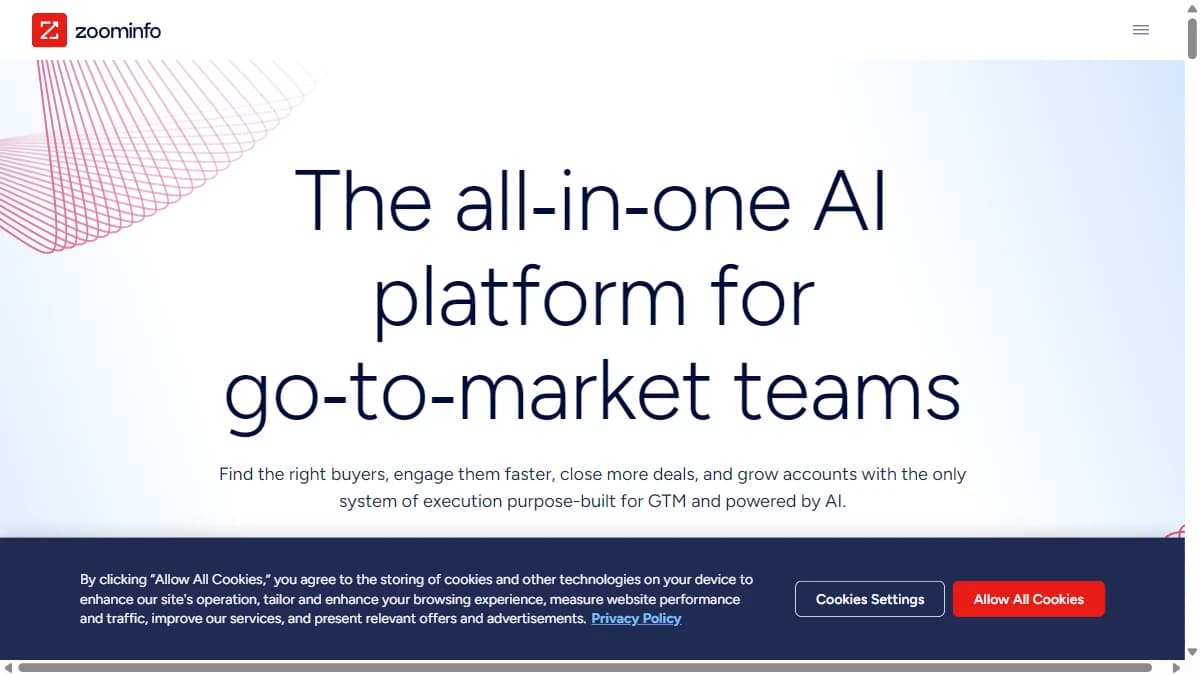
ZoomInfo — the enterprise standard for B2B sales intelligence with deep API and data customization.
ZoomInfo is the dominant enterprise B2B sales intelligence platform, with deep customization at the data API layer and strong signal subscription configurability. Its REST API covers contacts, companies, intent signals, and technographics — giving engineering-led GTM teams the ability to pull any data type into any CRM, data warehouse, or internal system.
Custom intent topic subscriptions let you configure which buying signals generate alerts. WebSights visitor de-anonymization is configurable by segment and routing destination. ZoomInfo Copilot (enterprise tier) adds AI-driven account prioritization. The tradeoff: no-code workflow customization is limited, and full configuration requires either dedicated RevOps or an engineering resource.
Pros
- REST API with full coverage across contacts, companies, intent, technographics
- Custom intent topic library — choose which buying signals to track
- CRM workflow triggers configurable at field and segment level
- WebSights visitor identification with custom alert routing by segment
- MCP (Model Context Protocol) integration for AI-native GTM workflows
- Data enrichment schedules configurable at interval level
- 250M+ contacts — largest proprietary database in the market
Cons
- No-code workflow builder is limited — complex routing requires CRM automation layers on top
- ICP scoring requires ZoomInfo Copilot (enterprise tier add-on)
- Pricing is opaque — most customization features require upgraded tiers
- Minimum contracts start at $15,000+/year — not viable for most teams under $5M ARR
Best for: Enterprise teams with RevOps or engineering resources who need a reliable, API-first data layer they can build custom integrations on top of.
Pricing: Custom. Most contracts start at $15,000+/year.
5. Cognism
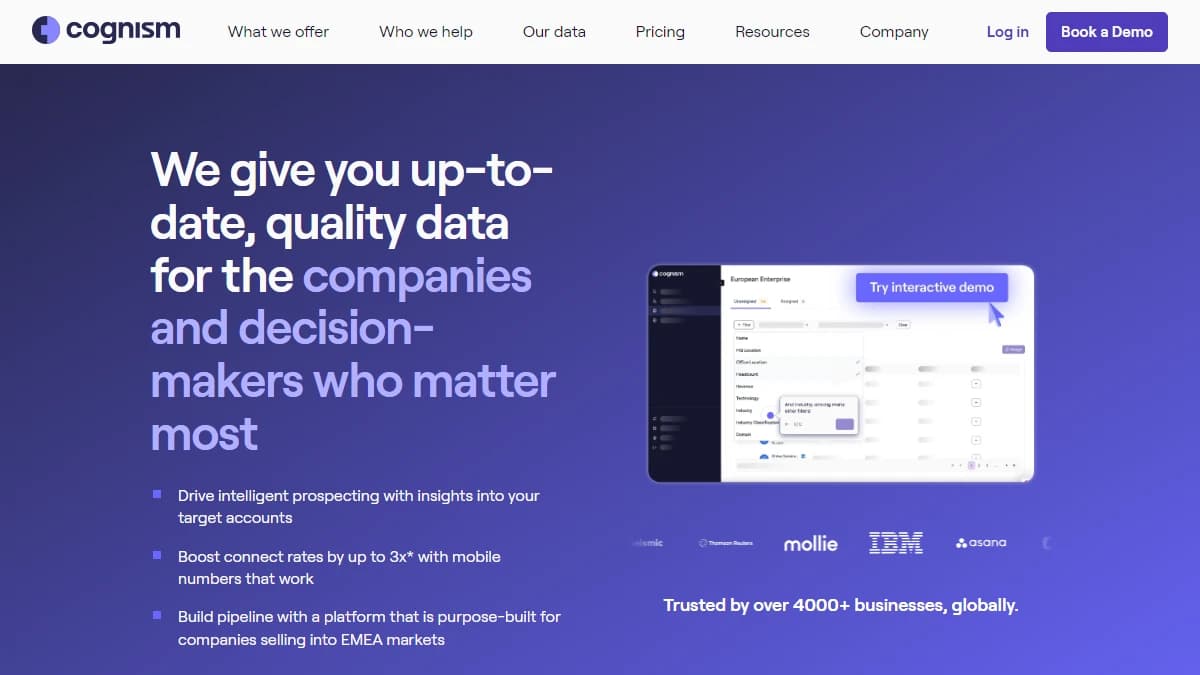
Cognism — GDPR-compliant sales intelligence with standout compliance and data quality customization for European teams.
Cognism is a GDPR-compliant sales intelligence platform with the strongest compliance-layer customization in the market. Its Diamond Data tier gives teams control over which contacts go through phone verification versus standard database lookup — a critical distinction for outbound calling programs where bad numbers waste SDR time.
GDPR compliance settings are configurable by region and outreach channel. Intent data via its Bombora partnership allows custom topic selection layered on top of contact filtering. For teams looking beyond Cognism, see the top Cognism alternatives in 2026.
Pros
- Phone-verification tier configurable per campaign or ICP segment
- GDPR compliance settings customizable by region, channel, and outreach type
- Custom CRM field mapping for Salesforce, HubSpot, and Salesloft
- Buyer intent via Bombora with custom topic selection
- Browser extension overlays surfacing custom ICP signals while browsing LinkedIn
- 87% mobile connect rate on Diamond Data contacts
Cons
- Workflow logic is basic — no native conditional routing or sequence branching
- Data source is proprietary — cannot add external enrichment providers
- Entry-level packages typically $1,500–$2,000/mo
- Limited to EMEA and US markets for phone verification coverage
Best for: European B2B teams where GDPR compliance and phone-verified contact quality are non-negotiable.
Pricing: Custom. Entry packages typically $1,500–$2,000/mo.
6. 6sense
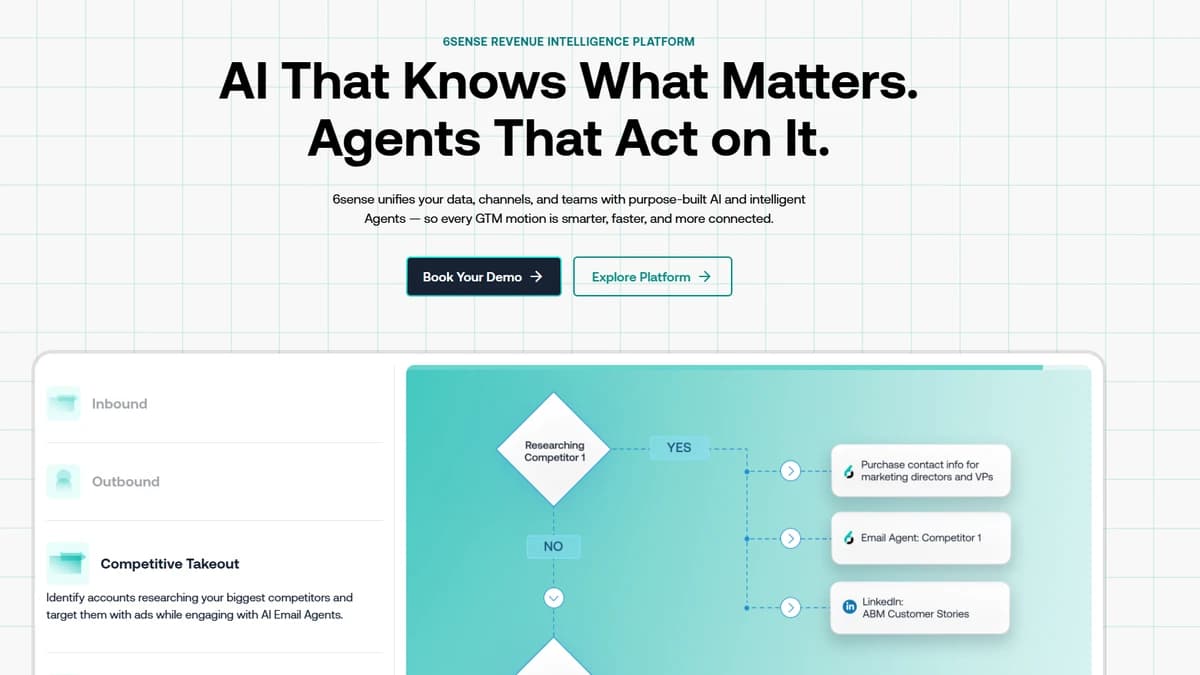
6sense — the deepest AI model and buying stage customization in the enterprise ABM market.
6sense is an ABM and sales intelligence platform with the deepest AI scoring model customization in the segment. Teams can define their own ICP criteria that train 6sense's Revenue AI engine, configure custom buying stage names and entry criteria, and subscribe to intent topics beyond the standard Bombora set.
Dynamic account segments auto-update as accounts move through buying stages. This makes 6sense the strongest pick for enterprise ABM programs where account prioritization logic needs to be precisely tuned to your specific revenue motion — not a generic model.
Pros
- Custom ICP definitions that train predictive scoring models at the AI layer
- Configurable buying stage taxonomy — define your own stage names and signal criteria
- Custom intent topic library beyond standard Bombora topics
- Dynamic account segments that auto-update based on signal activity
- Custom advertising audiences synced to buying stage segments
- Strong Salesforce and HubSpot CRM workflow integration
Cons
- Enterprise-only pricing — not viable for most teams under $5M ARR
- Implementation takes 6–12 weeks to configure properly
- Limited contact data enrichment compared to dedicated data providers
- Most customization features gated to higher-tier contracts
Best for: Enterprise B2B teams running sophisticated ABM programs where AI model-level customization for buying stage and ICP fit is the core workflow driver.
Pricing: Custom. Most contracts start at $60,000+/year.
7. LinkedIn Sales Navigator
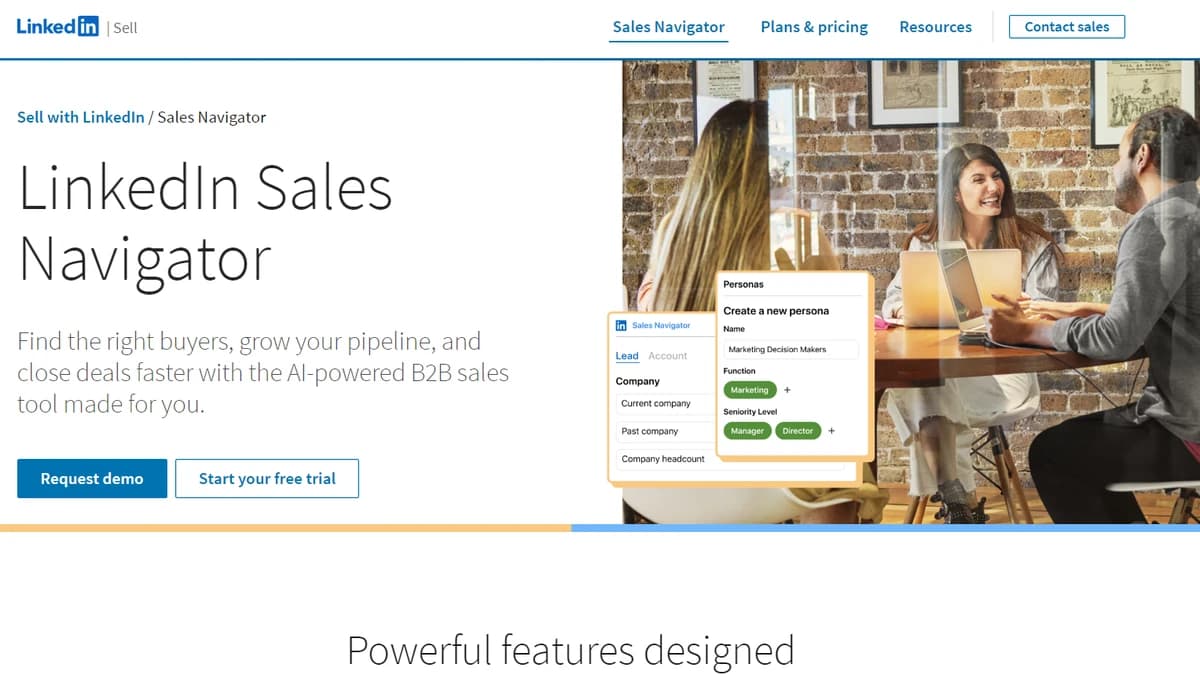
LinkedIn Sales Navigator — the most signal-rich prospecting tool with configurable account lists and real-time alerts.
LinkedIn Sales Navigator is the default social intelligence layer for B2B prospecting — 850M+ verified professional profiles, real-time job change alerts, and first-party engagement data that no other platform replicates. Its customization lives primarily at the account list, alert, and territory layer.
Custom account lists with saved filter combinations, configurable alert types (job changes, company news, engagement), and TeamLink visibility into colleague connections give it meaningful signal customization. What it lacks: no enrichment API for pulling data into workflows, and sequence execution requires a separate tool. It is best used as a signal layer on top of an enrichment platform.
Pros
- Custom account and lead lists with 40+ saved filter combinations
- Configurable alert types — job changes, company growth signals, content engagement
- TeamLink territory mapping — visibility into colleague connections for warm introductions
- CRM sync with Salesforce and HubSpot — configurable field mapping
- Real-time buying signal detection — 850M+ verified professional profiles with first-party data
- Advanced search filters for precise persona and segment targeting
Cons
- No enrichment API — cannot pull contact data programmatically into external workflows
- No native sequence execution — requires Outreach, Salesloft, or Apollo
- ICP scoring is not customizable — no weighted scoring model
- $99/user/mo base cost compounds quickly for larger teams
- Does not replace a dedicated enrichment platform for email or mobile data
Best for: B2B sales teams that need precise LinkedIn signal monitoring and account list management — used as a signal layer alongside a dedicated enrichment platform.
Pricing: Core plan from $99/user/mo. Advanced and Teams plans available.
8. Lusha
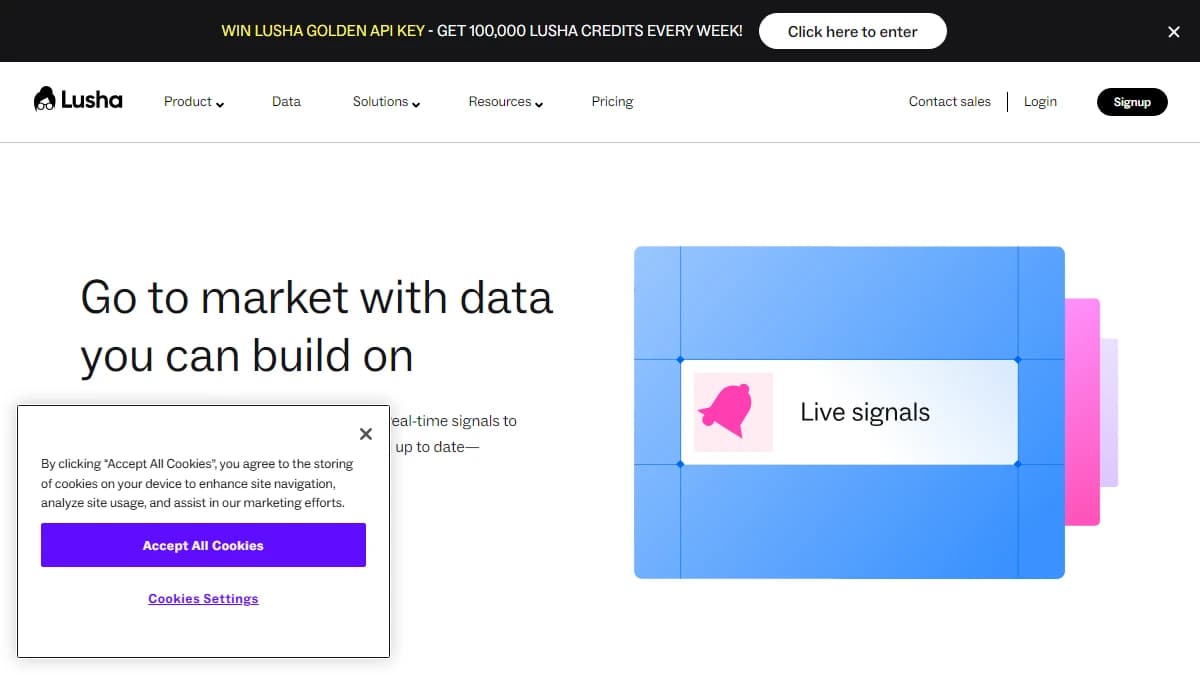
Lusha — the best team permission and CRM field mapping customization at an SMB-accessible price point.
Lusha is a B2B contact intelligence platform built for simplicity, but it delivers meaningful customization at the team management and CRM integration layer that is often overlooked in platform comparisons.
Lusha's role-based access controls let admins configure which team members can export contacts, view intent signals, or access enrichment credits. CRM field mapping is fully custom — you define which Lusha fields map to which Salesforce or HubSpot fields. For SMB teams that need clean permission structure and precise CRM sync without enterprise complexity, Lusha delivers solid flexibility at a fair price.
Pros
- Granular role-based access controls — configurable per team member and function
- Custom CRM field mapping for Salesforce, HubSpot, and Pipedrive
- Buyer intent with configurable Bombora topic selection
- Saved search templates shareable across the team
- API access for custom data pulls and automation workflows
- Free tier (5 credits/mo) with full feature preview
Cons
- No waterfall enrichment — single proprietary database with coverage gaps
- No native sequence execution — requires external outreach tool
- Workflow logic is minimal — routing and conditional rules require CRM automation
- Credit limits on lower tiers restrict high-volume use
Best for: SMB B2B teams that need clean team permissions, custom CRM field mapping, and intent data configuration without enterprise complexity or pricing.
Pricing: Free tier (5 credits/mo). Paid plans from $36/user/mo.
Sales Intelligence & B2B Prospecting Software Customization Options — Side-by-Side
| Platform | Data Source Flex | Workflow Logic | ICP Scoring | Output Routing | No-Code? | Starting Price |
|---|---|---|---|---|---|---|
| SyncGTM | High (75+ sources) | High | High | High | Yes | See pricing |
| Explorium.ai | Medium (own data, 100+ sources) | Via API/MCP | Low | High | Partial | $29.99/pkg |
| Apollo.io | Low (own data) | High | Low | Medium | Yes | $49/user/mo |
| ZoomInfo | Medium (API) | Low | Medium | High | Partial | $15k+/yr |
| Cognism | Low (own data) | Low | Medium | Medium | Partial | ~$1,500/mo |
| 6sense | Low | Medium | High | High | Partial | $60k+/yr |
| LinkedIn Sales Nav | Low (no API) | Low | Low | Medium | Yes | $99/user/mo |
| Lusha | Low (own data) | Low | Low | Medium | Yes | $36/user/mo |
How to Choose the Right Platform for Your Team
Customization depth only creates value when it matches your actual bottleneck. Before evaluating platforms, identify which of the four layers is causing the most friction in your current workflow.
- Data coverage is the bottleneck: Reps cannot find verified emails or mobile numbers for your ICP. Evaluate SyncGTM — it offers true multi-source waterfall enrichment and is fast to configure. For a deep dive on waterfall mechanics, see what waterfall enrichment means and how it works.
- Routing or sequencing is the bottleneck: Leads fall through gaps because no conditional logic governs who goes where. Apollo handles most no-code routing needs within its ecosystem. SyncGTM adds signal-based routing on top of enrichment. Explorium.ai suits technical teams that want AI agents to act on real-time events like funding rounds and job changes through its API and MCP server.
- Account prioritization is the bottleneck: Reps spend time on low-fit accounts because scoring is opaque. 6sense for enterprise ABM. SyncGTM for teams that need configurable scoring without a 6-month implementation. Persana AI for teams whose ICP definition is actively evolving.
- Output routing is the bottleneck: Enriched data does not land in the right CRM fields, Slack channels, or sequences. ZoomInfo and SyncGTM both handle complex output routing well. Lusha covers CRM field mapping cleanly for SMBs.
- Technical capacity constraint:If no one on your team has a GTM engineering background, prioritize no-code platforms — Apollo, SyncGTM, and Lusha. Explorium.ai's API and MCP paths go further, but they assume someone comfortable with technical setup.
According to G2's 2026 sales intelligence category data, 72% of buyers cite ease of customization as a top-three decision factor — ahead of database size and pricing. The winning strategy is to match customization ceiling to team capacity, then expand from there as the team grows.
For a broader comparison of which platforms lead on data accuracy, see the best waterfall contact providers ranked by hit rate.
Final Verdict
Sales intelligence and B2B prospecting software customization options vary dramatically across the eight platforms in this comparison. No single tool wins every dimension.
SyncGTM is the strongest choice for no-code teams that need customization across data, workflow, and scoring layers simultaneously — particularly teams replacing a fragmented enrichment, Apollo, and Instantly stack with something they can configure once and run automatically. Explorium.ai is the right choice when technical teams want AI agents to query and act on B2B data directly. Apollo is the right choice when sequence and filter flexibility is the priority and data coverage is not a blocker.
ZoomInfo, Cognism, and 6sense are strong in their respective niches (enterprise API, European GDPR compliance, and enterprise ABM) but require significant budget and implementation investment. LinkedIn Sales Navigator belongs in most stacks as a signal layer, not a standalone prospecting platform. Lusha is the cleanest entry point for SMB teams that need structure without complexity.
The right platform is the one your team can configure fully and maintain without a dedicated engineer. Start there — expand as the workflow matures. Ready to explore SyncGTM's customization options? See SyncGTM pricing or book a demo to walk through a waterfall enrichment and signal routing setup for your ICP.