

SalesIntel Review 2026: Verified Contacts, Intent Data, and Pricing

By Kushal Magar · April 8, 2026 · 12 min read · Last updated: September 30, 2026
Key Takeaway
SalesIntel is a B2B data platform built around AI and human-verified contacts refreshed on a 90-day cycle, with Research on Demand for custom sourcing and intent data that combines its own PredictiveIntent model with Bombora across 30+ signal categories. Pricing is quote-based; third-party estimates put entry contracts around $10,000/year, and the pricing page promises no credit counting or per-seat gatekeeping. Email accuracy is strong (95% claimed), but direct dials and coverage in niche industries are weaker, and there are no built-in outreach tools.
SalesIntel has 2,000+ human researchers re-verifying contact records every 90 days — claiming 95% accuracy. It's the only major B2B database with Research on Demand: you request a specific contact not yet in the database, and a researcher finds and verifies it within 24–48 hours. Pricing is quote-based, and intent data now combines SalesIntel's own PredictiveIntent model with Bombora's topic network.
The human verification is real and meaningful — particularly for email accuracy. Where it falls short: direct dial phone numbers are weaker than claimed, coverage in niche industries and international markets is thin, and an estimated $10K+/year entry price is hard to justify for small teams when alternatives like Apollo.io start at $49/mo.
SalesIntel Review: What You Get (and What You Don't)
SalesIntel positions itself as the most accurate B2B contact database because of its human verification process. Every contact is reviewed by a researcher and reverified every 90 days. Check how users rate it on G2.
| Feature | What's Included | Limitations |
|---|---|---|
| Human-Verified Contacts | Emails and phones verified by researchers every 90 days | Direct dials weaker than emails; niche industry coverage gaps |
| Research on Demand | Request specific contacts; researchers find them within 24 hours | Limited to available requests per plan; turnaround varies |
| Intent Data & Signals | PredictiveIntent plus Bombora (60,000+ topics) and 30+ signal categories such as funding, hiring surges, and job changes | Bombora topic intent is account-level; signal freshness varies by category |
| Technographics | 42,000+ technologies tracked across target companies | Less granular than dedicated technographic providers |
| Firmographics | Company size, revenue, industry, location data | Standard coverage; not differentiated from competitors |
The takeaway: SalesIntel pairs a human-verified contact database with a broader intent and signal layer than it once had. What it does not do is send outreach; sequencing happens in tools like Outreach or Salesloft, which it integrates with.
SalesIntel Human-Verified Data: How Accurate Is It Really?
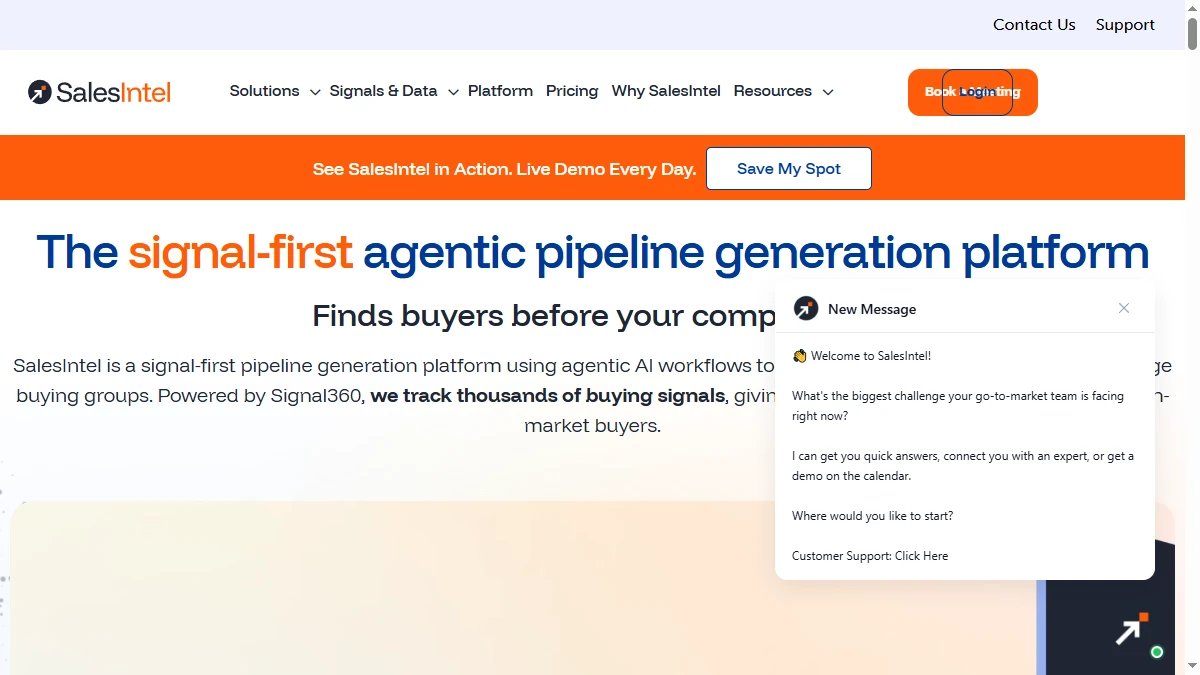
SalesIntel's core differentiator is human verification. A team of 2,000+ researchers manually verifies every contact in the database. They check email addresses, phone numbers, job titles, and company information. The verification cycle runs every 90 days, so records stay relatively fresh.
SalesIntel claims up to 95% accuracy on verified contacts. For email addresses, this holds up well in practice. Users on G2 consistently report strong email deliverability. The problem is phone numbers.
Where verification works
Email accuracy is SalesIntel's strength. The 90-day verification cycle catches job changes and company departures faster than providers that rely solely on automated scraping. For outbound email campaigns, this translates to lower bounce rates compared to unverified databases.
Where verification falls short
Direct dial accuracy is the weak point. G2 reviewers consistently flag that phone numbers are missing or inaccurate, especially for mid-level contacts. Coverage for niche industries and smaller companies is also limited — the verification team prioritizes high-demand contacts at large enterprises. Research on Demand can fill individual gaps, but teams that depend on cold calling should plan to confirm direct dials with a second source.
SalesIntel Intent Data and Technographics
SalesIntel combines its own PredictiveIntent model with Bombora's topic network, covering 60,000+ intent topics. You can see which target accounts are researching topics related to your product category. The Bombora data is account-level, meaning it tells you which companies are showing research activity but not which specific people at those companies are doing the research.
On top of topic intent, SalesIntel now tracks 30+ signal categories (as of September 2026), including funding rounds, executive hires, hiring surges, job changes, leadership changes, technographic shifts, website visitors, and competitor searches.
Technographic data covers 42,000+ technologies and shows which tools and platforms a company uses. This is useful for competitive displacement campaigns — if a target company uses a competitor's product, you can tailor your outreach accordingly.
Intent data limitations
Bombora intent data is based on content consumption across a publisher cooperative, so it shows research activity rather than purchase readiness, and only at the company level. The newer signal categories fill part of that gap, but how quickly each one surfaces events varies, so ask for sample signals on your own target accounts during a demo. Review our best buying intent data tools guide to compare how other platforms handle intent.
SalesIntel Pricing Breakdown
SalesIntel does not publish prices on its pricing page. As of September 2026, the page asks you to request a quote and describes the model as having no credit counting and no per-seat gatekeeping, with marketing and sales on the same tier and implementation, support, and pipeline consulting included. Third-party reports give a rough sense of the range:
- •Entry contracts (~$10,000/yr): third-party estimates for an annual term, including Research on Demand access and intent data
- •Multi-year discounts: 2-year contracts reportedly drop to ~$8,000/yr; 3-year contracts to ~$7,500/yr
- •Users and credits: the current pricing page lists unlimited users and unlimited credits, replacing the per-seat and per-credit add-ons reported in older contracts
What you actually pay
Because pricing is quote-based, the real number depends on team size, data needs, and contract length. Use third-party estimates only as an anchor: plan for a five-figure annual contract, confirm in writing that unlimited users and credits apply to your whole team, and hold off on multi-year terms until the data has proven itself on your ICP.
Hidden costs to watch
- No published prices — every deal starts with a sales conversation
- Five-figure entry point that prices out most small teams
- Annual contracts are the norm — no published monthly option
- No outreach tools included — email and LinkedIn require separate subscriptions
What Are the Downsides of Using SalesIntel?
Direct dial accuracy is inconsistent
G2 reviewers repeatedly flag that phone numbers — especially direct dials — are missing or inaccurate. Human verification helps with emails, but phone numbers change faster than a 90-day cycle can catch. If cold calling is central to your outreach, you will still need to verify numbers through other sources.
Coverage gaps in niche industries
SalesIntel's verification team prioritizes high-demand contacts at enterprise companies. If you sell into niche verticals — construction tech, agricultural SaaS, local government — coverage is noticeably thinner. Research on Demand helps fill gaps, but turnaround is not instant.
AI-generated data quality concerns
SalesIntel supplements its human-verified database with AI-generated data. Users report that this AI data is noticeably less accurate than the human-verified records. The platform does not always make it clear which contacts are AI-generated versus human-verified, creating a trust gap.
Signal depth varies by category
SalesIntel now layers 30+ signal categories on top of Bombora topic intent, but the Bombora data is account-level and topic-based, and the newer categories differ in how quickly they surface events. Teams that run tightly timed, trigger-based outreach should test signal freshness against a list of recent events they already know about. See our buying intent data tools guide to compare signal coverage across platforms.
Platform performance on large searches
Multiple G2 reviewers mention slow load times when running larger searches or filtering across large datasets. For teams doing high-volume prospecting, this adds friction to daily workflows.
How SalesIntel Works: From ICP to Buying Committee
SalesIntel has grown from a verified contact database into a broader prospecting platform. Here is how the pieces fit together in a typical workflow, based on what SalesIntel describes on its website as of September 2026.
- Score accounts against your ICP. ICP Fit Scores rate target accounts with a dimension-by-dimension breakdown, so reps can see why an account ranks where it does.
- Find verified contacts. Search 200M+ verified B2B contacts and 54M+ verified mobile numbers, maintained by AI plus a team of more than 2,000 researchers on a 90-day refresh cycle.
- Prioritize with intent and signals.PredictiveIntent and Bombora's topic network cover 60,000+ intent topics, alongside 30+ signal categories such as funding rounds, executive hires, hiring surges, and technographic shifts.
- Map the buying committee. Identify the stakeholders at each target account and activate them across sales and marketing, which SalesIntel keeps on the same tier.
- Fill gaps with Research on Demand. When data is missing, inaccurate, or unavailable in the platform, request it and a researcher sources it.
- Push data into your stack. Native integrations cover Salesforce, HubSpot, Outreach, Salesloft, Marketo, and LinkedIn Ads, with an API and webhooks for everything else. The RevDriver Chrome extension brings the data into the browser while prospecting.
SalesIntel says implementation, support, and pipeline consulting are included, which matters: ICP scoring and signal filters only pay off once they are configured to your market. The most useful test during an evaluation is simple. Bring a list of accounts you know well, then check contact accuracy, mobile coverage, and whether the signals match events you already know happened.
Is SalesIntel Worth It?
SalesIntel is worth it for mid-market and enterprise sales teams that prioritize email accuracy above all else and have the budget for a five-figure annual contract. The human verification process delivers genuinely better email data than most scraped databases. Research on Demand is a useful safety net when you cannot find a specific contact, and the newer signal layer adds timing context that the platform used to lack.
SalesIntel is harder to justify for small teams, for teams whose outreach depends on accurate direct dials, or for teams selling into niche verticals where coverage is thin. Quote-based pricing also means you cannot compare costs without going through a sales process.
The verdict: strong email accuracy through human verification and a much broader signal layer than before, but premium, quote-based pricing and weaker direct dials restrict it to teams with specific data quality needs.
Comparing B2B data providers? Read our reviews of Cognism, Clearbit, and our roundup of best ZoomInfo alternatives for 2026.
If SalesIntel's inconsistent direct dials are a dealbreaker, SyncGTM is one alternative worth a look: it looks up phone numbers and verified emails through waterfall enrichment across 50+ data providers.