


Vector Review 2026: AI Signal Intelligence — Pricing and Early Reviews

By Kushal Magar · April 8, 2026 · 12 min read · Last updated: September 30, 2026
Key Takeaway
Vector is an ABM platform that identifies contacts inside your target accounts, tracks 30+ buying signals (intent surges, job changes, champion moves, funding news), scores and stages accounts, and syncs contact-level audiences to LinkedIn, Google, Meta, and Reddit. As of September 2026, pricing is annual-only: Starter $36,000/year, Growth $60,000/year, and Scale $96,000/year, with usage-based signals, scoring, and advertising and unlimited seats. Main limitations: high entry price, annual commitment, relatively new platform with limited independent reviews, and no built-in outreach.
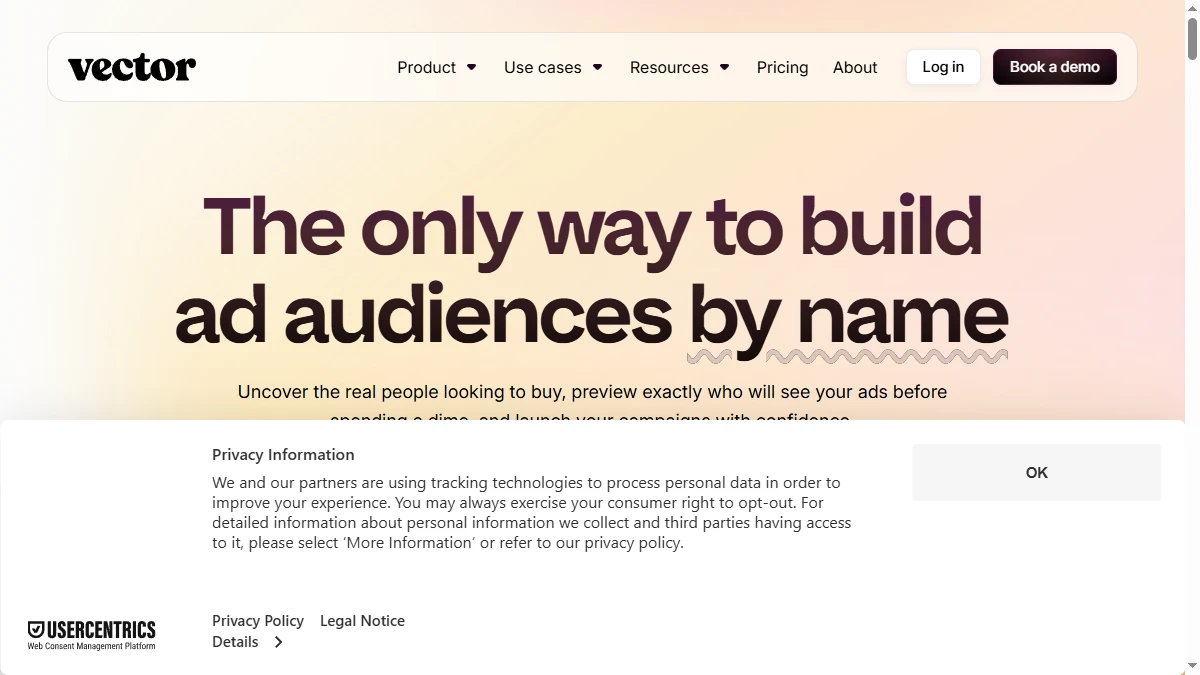
Vector is an account-based marketing (ABM) platform that identifies the people inside your target accounts, tracks buying signals across web, LinkedIn, and third-party sources, and turns them into scored accounts and ad audiences. Its pitch, as of September 2026, is "ABM finally works the way you thought it would," with contact-level data instead of black-box account scores. Pricing is annual-only and starts at $36,000 per year.
The contact-level approach is promising. The challenge in evaluating it: limited public reviews make accuracy claims difficult to validate independently. Teams considering Vector should run a structured pilot — apply the account scores to a known-ICP list and measure which percentage converts at higher rates than your current prioritization method.
Vector Review: What You Get (and What You Don't)
Vector positions itself as a contact-level ABM platform — a layer between your website, ad platforms, and CRM that identifies who is engaging with your brand and when they are ready to buy. One G2 reviewer described it as "RB2B and ZoomInfo combined into one, at a fraction of the price." See the full reviews on G2.
| Feature | What's Included | Limitations |
|---|---|---|
| Contact Identification | Identifies the people inside target accounts who engage with your brand | Coverage depends on engagement from your target accounts |
| Ad Audiences | Syncs contact-level audiences to LinkedIn, Google, Meta, and Reddit | Advertising is usage-based on top of the platform fee |
| Signal Scoring | 30+ ready-made signals plus custom AI-researched signals; scores with cited evidence | Signals and scoring are usage-based |
| Integrations | HubSpot, Slack, and major ad platforms; integrations and SSO on every plan | Salesforce not called out on the homepage |
| Attribution | Stories connect marketing activity to closed deals | Only as credible as the CRM data behind it |
| Outreach Automation | Sales notifications that hand signals to reps | No built-in email or LinkedIn sending |
The takeaway: Vector identifies who is engaging with your brand, scores their intent, and activates them in ads. It does not send outreach — you still need a separate tool for that.
Vector Signal Intelligence: How Buying Signals Work
As of September 2026, Vector tracks 30+ ready-made signals, including intent surges, job changes, champion moves, and funding news. They draw on website activity, LinkedIn engagement, and research intent, and you can add custom signals that Vector's AI researches for you.
Vector scores each account with the evidence behind the score and places it in a stage (Identified, Aware, Interested, Considering, Selecting, or Customer), updating stages daily. The practical output is a ranked view of which accounts are heating up and why, rather than a raw activity feed.
What works well
The signal aggregation is genuinely useful. Instead of checking five different tools for website visitors, ad engagement, and account research, Vector consolidates everything into one scored view of each account. The evidence-backed scoring helps sales teams focus on the highest-intent accounts first and see why each one ranks where it does. Users on G2 praise the enriched contact data and the ability to personalize outreach based on specific page interactions.
Where it falls short
Engagement signals still depend on your own traffic and ad reach. Low-traffic sites generate few website signals, which makes a $36,000-per-year entry point hard to justify. And any trigger outside Vector's signal library will not show up, so check the 30+ signals against the events that matter in your market before you sign.
Vector Identification and Ad Audiences: Contact-Level ABM
Vector's core is contact-level identification. Instead of stopping at "someone from Acme visited," it identifies the people inside your target accounts who are engaging with your brand. When we first reviewed Vector in April 2026, this was sold as a standalone product called Reveal, including an "Ad Reveal" feature for people who clicked your ads without filling out a form. As of September 2026, identification is part of the core ABM platform rather than a separate plan.
Identified contacts can then be synced as audiences to LinkedIn, Google, Meta, and Reddit, so your ads reach the specific people who are engaging, and attribution stories connect those campaigns to closed deals. For marketing teams running paid campaigns, that closes the gap between ad spend and actual pipeline. Compare this to other de-anonymization tools in our best buying intent data tools guide.
Usage-based components create budget uncertainty
Vector no longer bills per identified visitor, but signals, scoring, and advertising are usage-based, and Vector says contracts are priced from your actual usage rather than the preset figures. If your ABM program expands to more accounts or your ad activity grows, your contract value can grow with it. Ask for the usage assumptions behind your quote in writing before you sign.
Vector Pricing Breakdown
Vector publishes pricing on their pricing page. As of September 2026, every plan is an annual contract that includes the full platform:
- •Starter ($36,000/year): For teams running ABM on a few hundred target accounts.
- •Growth ($60,000/year): For teams working a full territory with sales and ads in play.
- •Scale ($96,000/year): For revenue organizations covering thousands of accounts across regions.
Every plan includes signals, scoring, journeys, advertising, attribution stories, sales notifications, integrations, and SSO, and seats are unlimited. Signals, scoring, and advertising are usage-based, and Vector notes that actual contracts are priced from your usage rather than the preset figures. No free trial is listed. When we first reviewed Vector in April 2026, it also sold a month-to-month Reveal plan from $399/mo; that plan no longer appears on the pricing page.
What you actually pay
The entry point is $36,000 per year, or $3,000 per month, before usage adjustments. A team working a full territory with ads in play is looking at the $60,000 Growth preset, or $5,000 per month. Both figures come before ad spend on the platforms themselves and before the outreach stack you will still need.
Hidden costs to watch
- Signals, scoring, and advertising are usage-based, so contract value grows with usage
- Annual commitment on every plan, starting at $36,000/year
- No outreach automation — you still need separate email and LinkedIn tools
- Low-traffic sites and small account lists get poor ROI at this price
- No free trial listed, so evaluation runs through a sales process
What Are the Downsides of Using Vector?
High entry price and annual contracts
As of September 2026, every Vector plan is an annual contract, starting at $36,000 per year for a few hundred target accounts. Signals, scoring, and advertising are usage-based on top of that, so a successful program that adds accounts or ad volume can raise your contract value. That puts Vector firmly in mid-market and enterprise territory.
Relatively new platform with limited reviews
Vector is newer to the market compared to established players like Clearbit, 6sense, or Demandbase. The G2 profile has limited reviews, which makes it harder to evaluate long-term reliability, support quality, and data accuracy at scale. Early adopters are positive, but the sample size is small.
Engagement signals still depend on your traffic
Vector now tracks external signals such as job changes, funding news, and research intent, but its contact-level identification and engagement signals depend on people from your target accounts visiting your site and engaging on LinkedIn. Companies with low traffic or early-stage websites will get less value from the platform than teams with established demand.
No built-in outreach tools
Vector identifies intent, scores accounts, and notifies sales, but does not send emails or LinkedIn messages. You need a separate outreach stack. For teams wanting signal detection and activation in one platform, compare our best sales prospecting tools roundup.
How Vector Works: From Target Accounts to Attributed Pipeline
Vector is built around a target account list rather than a contact database. Here is how the pieces fit together, based on what Vector describes on its site as of September 2026.
- Load your target accounts. Plans are sized by account coverage, from a few hundred accounts on Starter to thousands across regions on Scale.
- Identify the people who engage. Vector identifies contacts inside those accounts from website activity and LinkedIn engagement, rather than stopping at the company name.
- Layer on signals. 30+ ready-made signals, such as intent surges, job changes, champion moves, and funding news, sit alongside custom signals researched by AI.
- Score and stage accounts. Each account gets an AI score with the evidence behind it and a stage from Identified through Aware, Interested, Considering, and Selecting to Customer, updated daily.
- Activate in ads and sales. Contact-level audiences sync to LinkedIn, Google, Meta, and Reddit, and sales notifications alert reps when accounts move; Slack is among the listed integrations.
- Attribute the results. Stories connect marketing activity to closed deals, so you can show which programs influenced pipeline.
Vector does not send outreach itself, so plan the hand-off before launch: decide which stage changes trigger a rep follow-up, which sequencing tool reps use, and how activity flows back into your CRM. Wiring that up early is what turns the scores into pipeline rather than another dashboard.
Is Vector Worth It?
Vector is worth it for mid-market and enterprise B2B companies that run ABM with meaningful website traffic and ad budgets, and need contact-level identification and signal-driven ad audiences. Unlimited seats, evidence-backed account scoring, and direct audience sync to the major ad platforms are genuine strengths.
Vector is not worth it for early-stage companies with low traffic, teams on tight budgets, or organizations that need outreach automation built into their signal platform. The $36,000-per-year entry point puts it out of reach for most startups and SMBs.
The verdict: an impressive contact-level ABM platform, but annual-only pricing, usage-based components, and the lack of outreach tools make it a fit for well-funded ABM programs rather than most B2B teams.
Evaluating signal intelligence tools? Read our reviews of Warmly, 6sense, and our best buying intent data tools roundup.
If Vector's annual-only contracts are a dealbreaker, SyncGTM is one alternative worth a look: it is free to start and tracks real-time buying signals such as job changes, funding, and hiring.