11x.ai Review 2026: AI SDR Alice Tested — Is the Pricing Justified?

By Kushal Magar · March 18, 2026 · 13 min read
Key Takeaway
11x.ai is an AI SDR platform built around Alice, an autonomous digital sales representative that handles prospect research, email personalization, outreach sequencing, and follow-up scheduling across email and LinkedIn. The platform targets enterprise teams with high outbound volume. Pricing is custom enterprise-only, with user reports on G2 suggesting $5,000 to $15,000+ per month depending on contract terms — no free trial or self-serve signup is available. Alice generates personalized emails using AI research, but the personalization engine lacks access to real-time buying signals such as job changes, funding rounds, or hiring activity, meaning outreach is based on static profile data rather than in-market timing. According to Gartner's 2025 B2B Buyer Survey, 75% of B2B buyers prefer a rep-free sales experience, which strengthens the case for autonomous SDR tooling — but 11x.ai's pricing requires significant budget commitment before results can be measured.
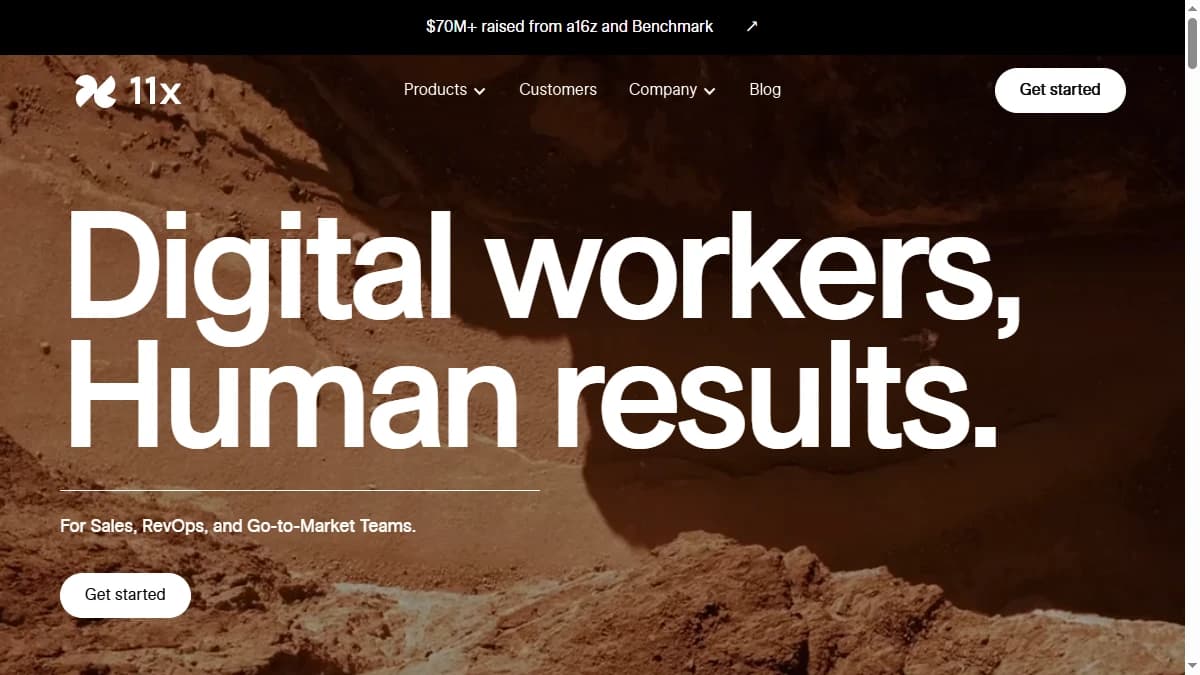
11x.ai built Alice, an AI SDR that autonomously prospects, writes emails, and books meetings. The pitch: replace your human SDR team with an AI agent that works 24/7, never takes a sick day, and scales without hiring. Alice researches prospects, crafts personalized emails, manages follow-up sequences, and books meetings directly into your calendar.
You are probably here because you are evaluating whether an AI SDR can replace headcount. That is the right question. But there is a more important one: does Alice know who to email and when?
According to Gartner's 2025 B2B Buyer Survey, 75% of B2B buyers prefer a rep-free sales experience until they are ready to buy. The timing of outreach matters more than the volume. An AI that sends a thousand emails to people who are not in-market is just automated spam.
This 11x.ai review covers what Alice does well, where autonomous outreach falls short without buying signals, what it actually costs, and whether SyncGTM is a better investment for teams that want outreach driven by real intent data.
11x.ai Review: What You Get (and What You Don't)
11x.ai positions itself as a digital workforce company. Alice is the AI SDR agent. She handles the full outbound cycle: identifying prospects, researching them, writing personalized emails, managing sequences, handling replies, and booking meetings.
| Feature | What's Included | Limitations |
|---|---|---|
| AI Prospecting | Autonomous lead identification based on ICP criteria | No real-time buying signal detection |
| Email Writing | AI-generated personalized emails based on prospect research | Personalization lacks signal context — no timing awareness |
| Meeting Booking | Automated calendar booking from positive replies | Dependent on email engagement — no phone or LinkedIn |
| CRM Integration | Salesforce and HubSpot sync | Meeting booking sync only — no enrichment |
| Buying Signals | Not available | No job change, funding, hiring, or intent data |
The takeaway: Alice handles the mechanics of outreach well. What she lacks is the intelligence layer — knowing who is actually in-market right now.
Alice AI SDR: How Autonomous Outreach Works
Alice works in three stages. First, she identifies prospects matching your ICP from available data sources. Second, she researches each prospect using LinkedIn profiles, company websites, and public data. Third, she writes and sends personalized emails with automated follow-ups.
The autonomous loop is genuinely impressive from an engineering standpoint. Alice can process thousands of prospects without human intervention. She adjusts messaging based on prospect responses and optimizes send times.
What works well
Alice eliminates the repetitive parts of SDR work: list building, research, email drafting, and follow-up management. For teams running high-volume outbound, this saves dozens of hours per week. The meeting booking integration means positive replies turn into calendar events automatically.
Where it falls short
Alice does not know if a prospect just raised funding, switched jobs, adopted a new tool, or published content about a problem you solve. She writes to everyone on the list with equal priority. A VP of Sales who just switched companies last week gets the same outreach as one who has been settled for three years.
SyncGTM monitors buying signals like job changes, funding rounds, hiring spikes, and technology adoption in real time. When a signal fires, outreach is triggered with context about why this prospect matters right now. That is the difference between autonomous outreach and signal-driven outreach.
Personalization Quality: AI-Generated vs. Signal-Driven
Alice's emails are well-written. The AI references the prospect's role, company, and industry. It avoids the obvious AI tells — no “I hope this email finds you well” or “I noticed your company is doing great things.”
But personalization without timing context is a parlor trick. A well-written email about data enrichment sent to a VP of RevOps who just adopted a new enrichment tool last month is irrelevant. The same email sent to a VP of RevOps whose company just raised a Series B and is hiring three SDRs is timely and relevant.
Signal-driven personalization
SyncGTM detects the buying signal first, then enriches the contact with firmographic, technographic, and intent data. Outreach tools — whether 11x, Reply.io, or manual email — use that context to craft messages that reference a real, recent event. “I saw your team just opened three SDR roles” beats “I noticed you are VP of Sales at Acme” every time.
11x.ai Pricing Breakdown
11x.ai does not publish pricing. This is an enterprise-only product with a custom quoting process. Based on G2 reviewer reports and Reddit discussions, here is what teams are paying:
- --Estimated range: $5,000–$15,000+/mo depending on outreach volume and features
- --Contract type: Annual commitments standard. No month-to-month option reported.
- --Free trial: Not publicly available. Demo-first sales process.
What you actually pay at scale
At $10,000/mo, Alice needs to book enough qualified meetings to replace one or two human SDRs. A junior SDR in the US costs $50K–$70K/year ($4K–$6K/mo fully loaded). Alice is cheaper than two SDRs — but only if the meeting quality justifies the cost.
Compare that to SyncGTM at $99/mo for the signal and enrichment layer that makes any outreach tool — including Alice — more effective. You could run SyncGTM for four years for the cost of one month of 11x.
Hidden costs to watch
- Opaque pricing: No way to compare costs until you talk to sales
- Annual lock-in: Enterprise contracts with no monthly flexibility
- Onboarding time: Setup and ICP calibration takes weeks
- No signal layer: You may need to add a signal tool like SyncGTM anyway, increasing total spend
What Are the Downsides of Using 11x.ai?
AI without signals is automated spam
Alice writes well. But she does not know who is in-market. She emails everyone matching the ICP with equal priority. Without buying intent data, a significant portion of Alice's outreach lands on people who are not ready to buy. That is volume, not precision.
Enterprise pricing locks out SMBs
At $5K–$15K+/mo, 11x.ai is inaccessible to startups and small teams. The product is built for companies with established outbound motions and the budget to experiment with AI. If you are under 10 reps, the ROI math is tough.
No transparent pricing
You cannot compare 11x.ai's cost against alternatives without going through a sales process. This makes it hard for RevOps teams to build a business case internally. SyncGTM publishes pricing on the website — you know exactly what you are paying before you sign up.
Personalization quality varies at scale
Alice's emails are good in demos. At scale — thousands of prospects per month — the personalization can start to feel templated. Without real-time signals providing unique context for each prospect, the AI falls back on generic patterns.
SyncGTM vs. 11x.ai: Feature-by-Feature Comparison
Here is how SyncGTM compares to 11x.ai across the features that matter for revenue teams:
| Feature | SyncGTM | 11x.ai |
|---|---|---|
| Starting Price | $99/mo (flat, all-inclusive) | ~$5,000+/mo (custom enterprise) |
| Buying Signals | Job changes, funding, hiring, intent | Not available |
| Enrichment Depth | Waterfall across 20+ providers | Basic prospect research |
| Self-Serve Access | Yes — sign up and start today | No — enterprise sales process required |
| CRM Enrichment | Auto-enrich on entry + workflows | Meeting booking sync only |
| Pricing Transparency | Public pricing page | Custom quotes only |
Waterfall Enrichment
SyncGTM queries 20+ data providers in sequence to fill every field. 11x.ai relies on basic prospect research that misses firmographic and technographic depth.
Buying Signals
SyncGTM monitors job changes, funding rounds, hiring spikes, and tech adoption in real time. 11x.ai sends to lists without timing awareness.
Signal-Driven Outreach
SyncGTM triggers outreach when a buying signal fires. 11x.ai runs on schedules and sequences regardless of prospect readiness.
Flat Pricing
SyncGTM: $99/mo flat. 11x.ai: $5K–$15K+/mo with enterprise contracts and no transparency.
Is 11x.ai Worth It?
11x.ai is worth evaluating if you are an enterprise team with a $60K+/year budget for outbound automation and the outreach volume to justify replacing human SDRs. Alice handles the mechanics of prospecting, emailing, and booking well. The autonomous approach saves real time.
11x.ai is not enough for teams that need precision over volume. If your market is narrow, your deal sizes are large, or your buyers expect relevance — signal-driven outreach will outperform autonomous outreach every time. Sending 10,000 emails without buying intent context is expensive spray-and-pray.
The verdict: impressive AI technology with enterprise pricing. But AI without buying signals is just automated cold outreach. For most teams, SyncGTM at $99/mo delivers more ROI by adding the signal intelligence that makes any outreach tool — including 11x — significantly more effective.
Comparing other outreach tools? Read our in-depth reviews of Artisan (Ava), AiSDR, Reply.io, Instantly, and Smartlead.