

6 Best Waterfall Email Finders in 2026 (Higher Hit Rate Than Single-Source Tools)

By Kushal Magar · May 21, 2026 · 14 min read
Key Takeaway
Single-source email finders return valid addresses for 40–65% of a typical B2B list. Waterfall email finders cascade across 10–50+ databases and hit 85–95% coverage. SyncGTM leads with 50+ provider waterfall, bounce protection, buying signals, and CRM sync from $99/mo. FullEnrich is the dedicated waterfall specialist at $29/mo. BetterContact excels at mobile enrichment. FindyMail has the tightest deliverability guarantees. Dropcontact is the EU-native GDPR choice. Hunter.io is the entry point for teams starting a waterfall stack.
TL;DR
| Tool | Best For | Providers | Starting Price |
|---|---|---|---|
| SyncGTM | Best overall — signals + CRM sync | 50+ | $99/mo (free tier available) |
| FullEnrich | Dedicated waterfall specialist | 20+ | $29/mo |
| BetterContact | Mobile + email waterfall | 20+ | $49/mo |
| FindyMail | Tightest deliverability guarantee | Multi-source | $49/mo |
| Dropcontact | GDPR-compliant EU enrichment | Public sources | €24/mo |
| Hunter.io | Entry-level domain-based lookup | Proprietary | $34/mo |
Why Waterfall Email Finders Beat Single-Source Tools
Single-source email finders draw from one proprietary database. That database covers roughly 40–65% of a typical B2B prospect list — and nothing outside it.
Waterfall email finders cascade through 10 to 50+ databases sequentially. If Provider A returns nothing for a contact, Provider B runs. Then C. Each step adds coverage until the tool either finds a verified email or exhausts the chain.
The math is straightforward. If Provider A covers 55% of your list and Provider B covers a different 30%, the waterfall delivers closer to 75% combined coverage — with verification filtering out overlapping bad data. FullEnrich's internal benchmarks put well-configured waterfalls at 85–96% verified email coverage on tested lists.
Beyond hit rate, waterfall tools also protect sender reputation. They return only verified addresses — not raw matches — which keeps bounce rates below 3% compared to 8–15% from unverified single-source data.
For a deeper look at how the waterfall mechanism works, see what waterfall enrichment is and why it beats single-source data.
1. SyncGTM
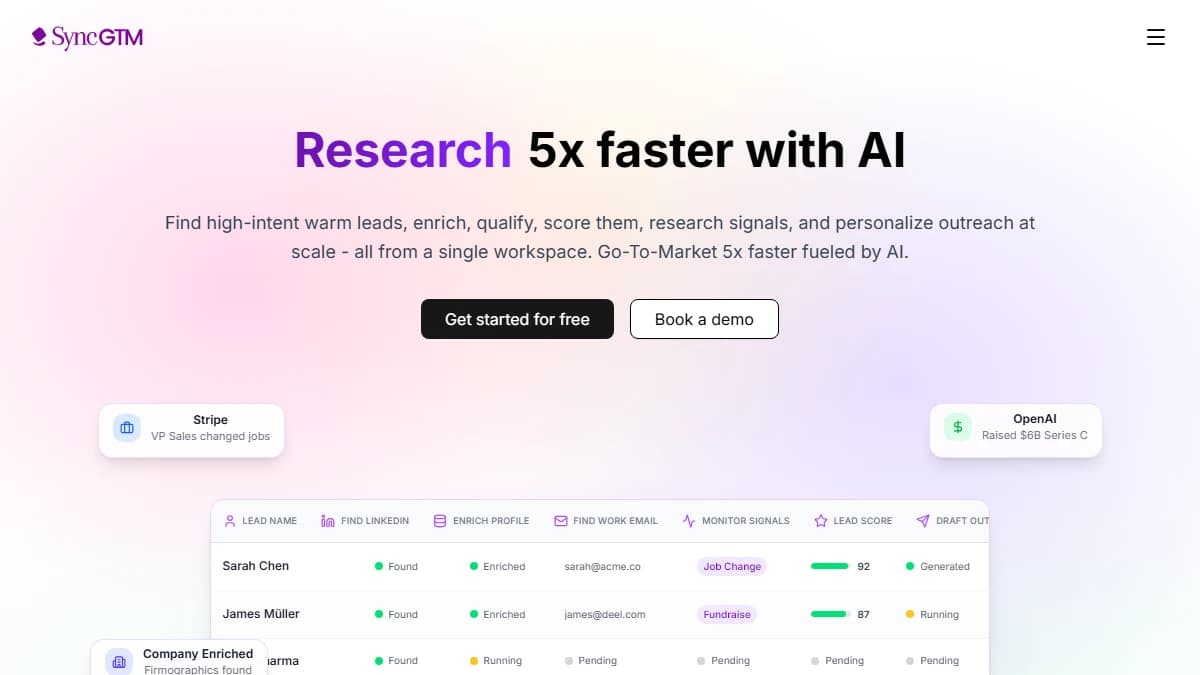
SyncGTM — waterfall enrichment across 50+ providers with buying signals and CRM sync from $99/mo
SyncGTM is a GTM platform that runs waterfall email enrichment across 50+ data providers as part of a broader workflow. It is the strongest pick for teams that want high email coverage and a complete outbound stack in one place.
The waterfall engine cascades through providers in priority order — starting with the highest-accuracy sources and falling to broader databases as needed. Every result is verified before it leaves the system.
What sets SyncGTM apart from dedicated waterfall tools is the signal layer. Every enriched contact comes with buying intent signals, job change alerts, and funding triggers — so you know not just who has a valid email but which contacts are in-market right now.
Native CRM integrations (HubSpot, Salesforce, Pipedrive) push clean, enriched records directly. No Zapier middleware. No manual CSV exports.
SyncGTM is also the most cost-efficient option at scale. Its pay-only-for-valid-records model means you are not charged for contacts where enrichment fails — unlike credit-based tools that deduct credits regardless of result quality.
Pros
- 50+ provider waterfall — highest coverage of any tool in this list
- Built-in verification: bounce rate stays below 3%
- Buying signals, job change, and funding alerts on every enriched contact
- Native CRM sync to HubSpot, Salesforce, and Pipedrive
- AI workflow automation — enrich, score, and route leads without manual steps
- 200-credit free tier — no credit card required to start
Cons
- Overkill for teams that only need email lookup without workflow automation
- Paid plans start at $99/mo — higher entry point than FullEnrich's $29/mo
Best for: B2B outbound teams that want waterfall email coverage plus buying signals and CRM sync on one platform.
Pricing: Free tier (200 credits/mo). Paid from $99/mo.
2. FullEnrich
FullEnrich — dedicated waterfall enrichment across 20+ providers from $29/mo
FullEnrich is a dedicated waterfall enrichment tool built around one thing: maximum email and phone coverage from a single API call. It chains 20+ data providers and has reported 96% match rates on independent tests.
FullEnrich targets B2B teams running outbound at volume. Its API integrates into Clay, n8n, Make, or any custom stack. Bulk CSV enrichment is also available for non-technical users.
Pricing is credit-based. Email credits and phone credits are separate — a friction point for teams doing both. Phone lookups cost 10 credits per number, which makes high-volume phone enrichment expensive relative to competitors.
For more detail, see the full FullEnrich review.
Pros
- 20+ provider waterfall — top independent match rate benchmarks
- Clean API — easy to integrate into Clay, n8n, Make
- Simple credit billing — no complex plan tiers
- Affordable entry point at $29/mo
Cons
- 10 credits per phone number — expensive at volume
- No Chrome extension since 2024
- No workflow automation, CRM sync, or buying signals
- 50-credit free trial expires — no ongoing free tier
Best for: Teams integrating a waterfall API into an existing automation stack (Clay, n8n, Make).
Pricing: From $29/mo. Free trial: 50 credits.
3. BetterContact
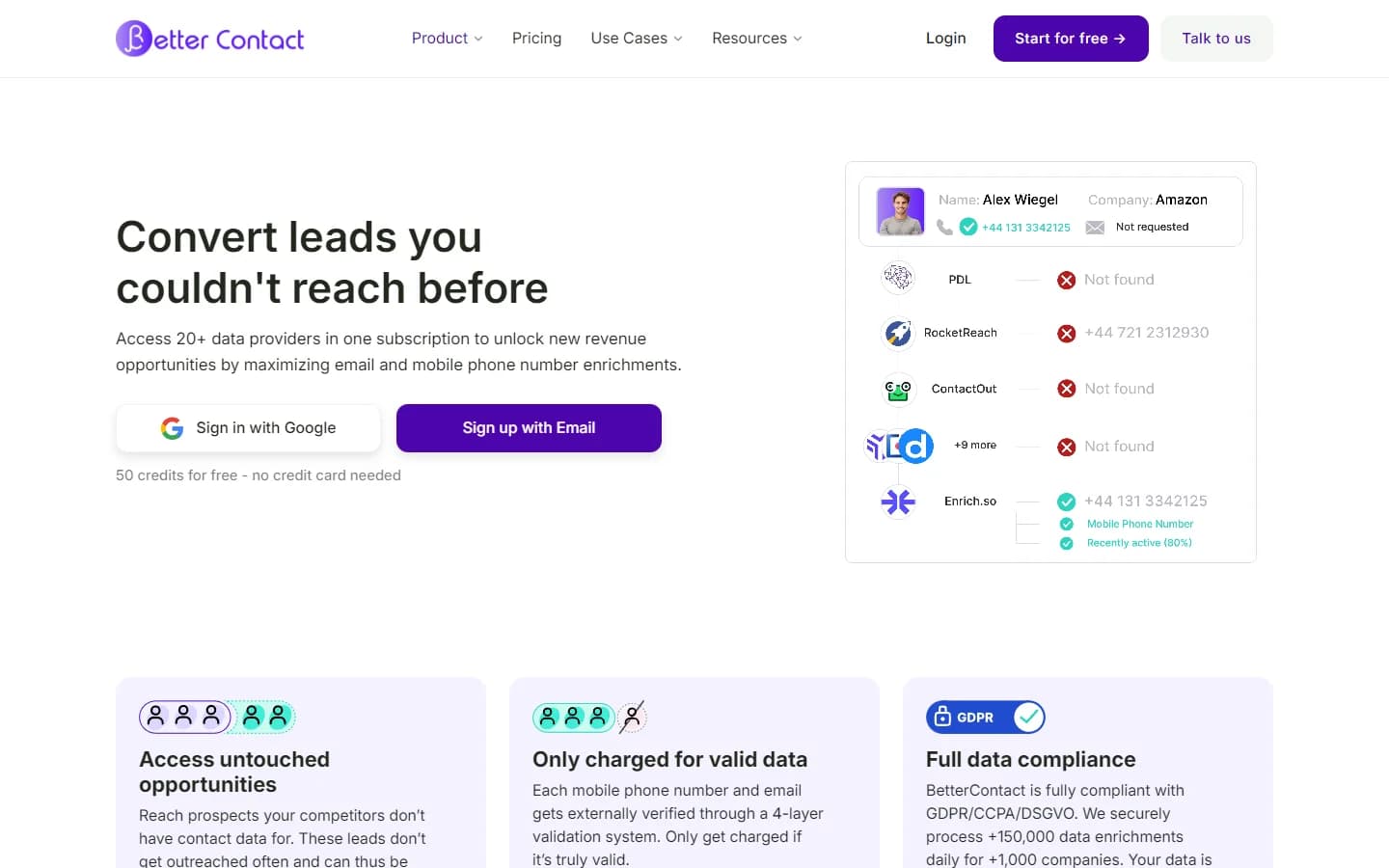
BetterContact — waterfall enrichment for email and mobile across 20+ providers
BetterContact is a waterfall enrichment platform with a 3 billion+ contact database spanning 20+ providers. It covers both work email and mobile phone numbers in a single cascade.
The platform positions itself as the highest mobile phone hit rate of any waterfall tool. For outbound teams running call campaigns alongside email, this dual-channel coverage eliminates the need for a separate phone enrichment tool.
BetterContact integrates with Clay, Apollo, and Instantly via API or Zapier. It also has a no-code interface for CSV enrichment. Flat-rate pricing makes costs predictable at volume — unlike FullEnrich's 10-credit phone lookup cost.
See how BetterContact compares to the field in the BetterContact alternatives roundup.
Pros
- 3B+ contact database across 20+ providers
- Best mobile phone hit rate in the waterfall category
- Flat-rate pricing — predictable cost at volume
- Works natively with Clay, Apollo, Instantly
Cons
- No workflow automation beyond enrichment
- No native CRM sync — requires Zapier or manual export
- Entry plan limits bulk batch size
Best for: Teams running email + phone campaigns who need one waterfall tool for both channels.
Pricing: From $49/mo. Free trial available.
4. FindyMail
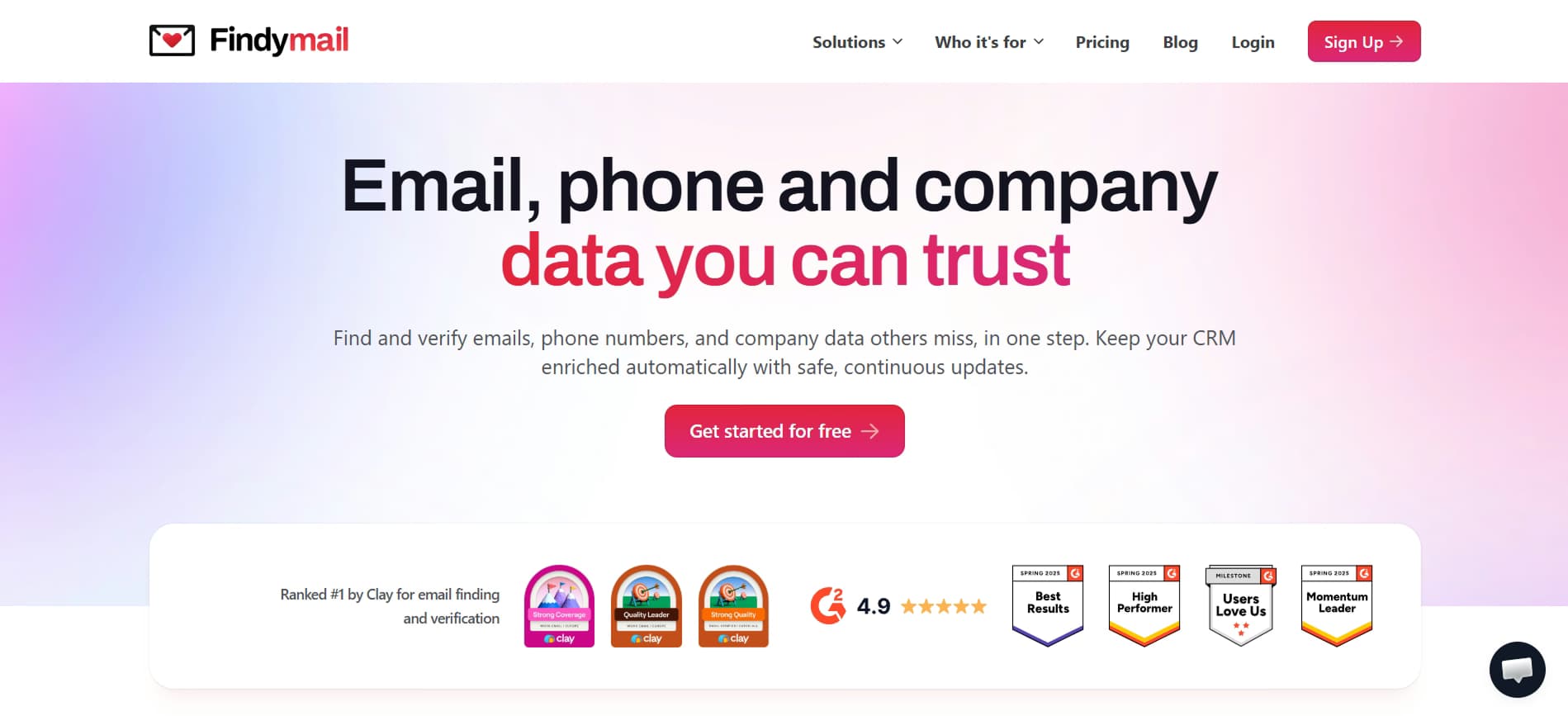
FindyMail — verified email finder with a deliverability guarantee and multi-source cascade
FindyMail is an email finder that makes deliverability its core differentiator. It draws from multiple sources and applies strict verification before returning any result — reporting 95%+ deliverability on verified emails.
The pay-per-verified model means you only pay for emails that pass FindyMail's verification standard. Credits are not consumed on failed lookups. This pricing model is the most transparent of any tool in this list.
FindyMail integrates with LinkedIn Sales Navigator via its Chrome extension, making it useful for SDRs who are building lists manually from LinkedIn searches. The Sales Navigator export feature lets you enrich 2,500 contacts per search export.
For a full breakdown of pricing and performance, see the FindyMail review.
Pros
- 95%+ deliverability on returned emails — strongest guarantee in this list
- Pay-per-verified: credits only consumed on successful lookups
- LinkedIn + Sales Navigator Chrome extension
- Strict catch-all handling — flags risky addresses instead of passing them
Cons
- Email only — no phone enrichment
- Smaller provider network than SyncGTM or FullEnrich
- No buying signals, CRM sync, or outreach automation
Best for: Teams prioritizing deliverability over raw coverage — especially SDRs enriching from LinkedIn.
Pricing: From $49/mo. Pay-per-verified credits.
5. Dropcontact
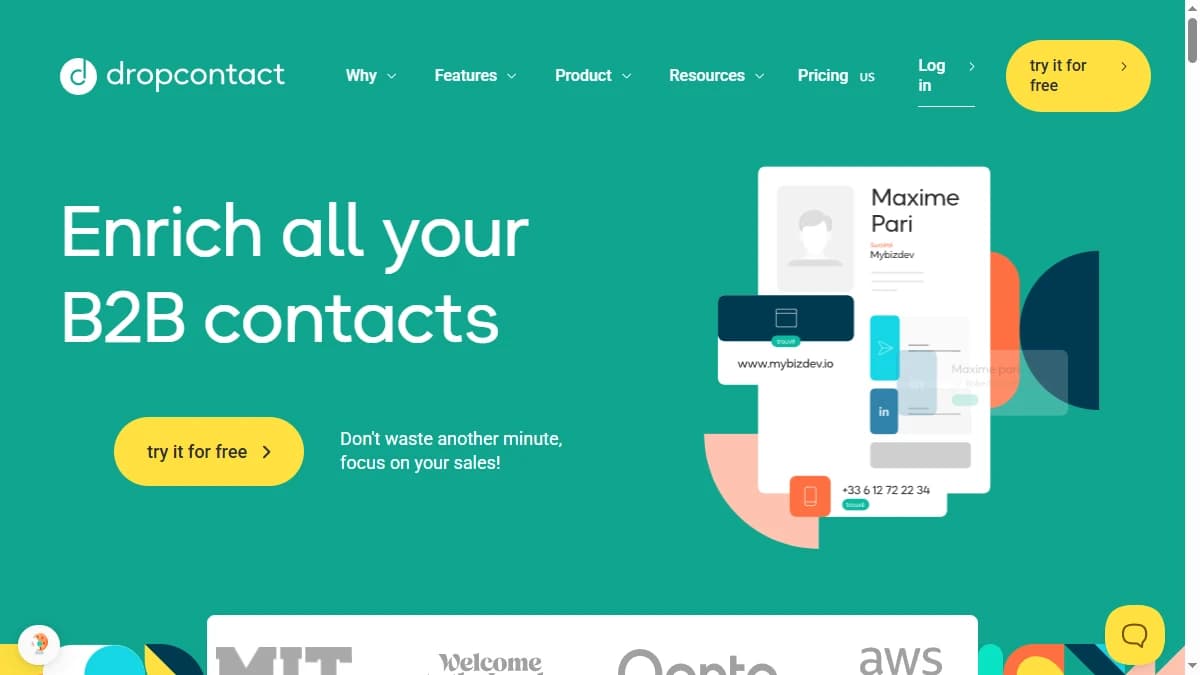
Dropcontact — GDPR-native email enrichment built on public sources only
Dropcontact is a GDPR-compliant email enrichment tool built exclusively on publicly available sources. It was built in France, designed specifically for EU/UK compliance requirements.
Unlike tools that aggregate third-party purchased databases, Dropcontact crawls public web sources in real time to construct email addresses algorithmically. This means no third-party data broker in the chain — the strongest legal position for European outreach.
Dropcontact also handles data quality beyond email: it deduplicates, corrects job titles, standardizes company names, and enriches LinkedIn URLs in CRM records. Native integrations exist for HubSpot, Pipedrive, Salesforce, and Zoho.
The tradeoff is coverage. Because Dropcontact uses only public sources, hit rates are lower than multi-provider waterfall tools — typically 60–75% versus 85–95% for commercial database waterfalls. It is best used as a GDPR-safe layer within a broader stack, not as the only enrichment source.
Pros
- 100% public-source data — strongest GDPR legal basis
- Built-in data quality: deduplication, title correction, LinkedIn enrichment
- Native CRM integrations for HubSpot, Pipedrive, Salesforce, Zoho
- No third-party data broker risk
Cons
- Lower hit rate than commercial database waterfalls (60–75%)
- Email only — no phone enrichment
- Pricing can be higher per-credit for small volumes
Best for: EU/UK teams where GDPR compliance is a hard requirement.
Pricing: From €24/mo. Credits scale with volume.
6. Hunter.io
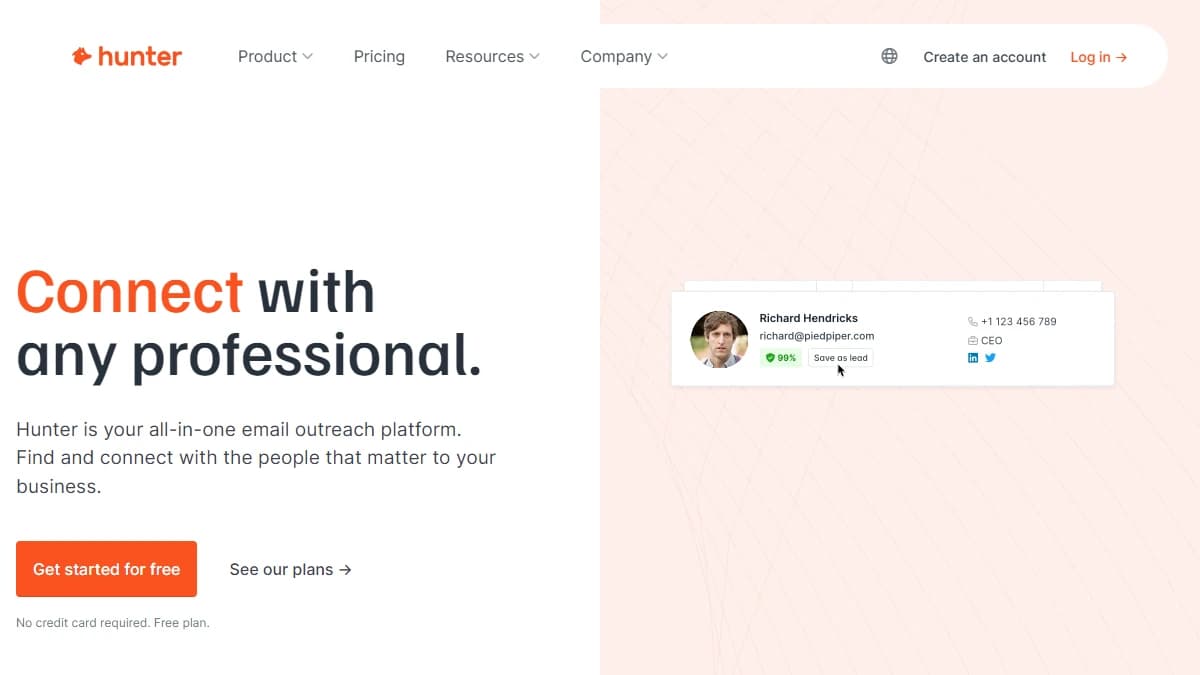
Hunter.io — domain search and email verification, the most widely used entry-level email finder
Hunter.io is the most widely used email finder in B2B sales. It combines domain-based email discovery, a pattern inferrer, and an email verifier in a single tool. Over 4 million users have used Hunter since its launch.
Hunter is not a multi-provider waterfall tool in the same way as the others on this list — it draws primarily from its own proprietary database of 200M+ emails indexed from the web. What it does well: domain search returns all known email addresses at a company, and the email verifier applies SMTP checks to flag risky addresses before you send.
Hunter's most common use case is as the first layer in a waterfall stack. Teams run Hunter first (cheapest per lookup), then fall to a broader multi-provider tool like FullEnrich or SyncGTM for the contacts Hunter misses. According to independent outreach stack analyses, Hunter covers about 40–55% of a typical B2B list — respectable for a single source, but the gap to waterfall coverage is why it sits at position 6.
Hunter also includes a cold email sequencing tool (Campaigns) and a Chrome extension for LinkedIn lookup. Campaigns integration makes it a reasonable starting point for solo SDRs or small teams not yet ready for a full outbound platform.
Pros
- 200M+ proprietary email database — strong single-source coverage
- Built-in email verifier with SMTP checks
- Chrome extension for LinkedIn and domain search
- 25 free searches/mo — best free tier for small teams
- Campaigns feature for cold email outreach built in
Cons
- Single-source: hits 40–55% coverage vs 85–95% for waterfall tools
- No phone enrichment
- No buying signals, workflow automation, or CRM sync beyond Zapier
- Coverage gaps in non-English-speaking markets
Best for: Solo SDRs or small teams starting an outbound stack who need a low-cost, easy entry point.
Pricing: Free (25 searches/mo). Paid from $34/mo.
Side-by-Side Comparison
| Tool | Providers | Hit Rate | Phone | CRM Sync | GDPR | Starting Price |
|---|---|---|---|---|---|---|
| SyncGTM | 50+ | 85–95% | Yes | Native | Yes | $99/mo |
| FullEnrich | 20+ | 85–96% | Yes (10 cr/no.) | Zapier only | Yes | $29/mo |
| BetterContact | 20+ | 80–92% | Yes (flat rate) | Zapier only | Yes | $49/mo |
| FindyMail | Multi-source | ~75–85% | No | Zapier | Yes | $49/mo |
| Dropcontact | Public sources | 60–75% | No | Native | Best-in-class | €24/mo |
| Hunter.io | Proprietary | 40–55% | No | Zapier | Yes | $34/mo |
How to Choose the Right Waterfall Email Finder
- You need the highest hit rate and don't want to manage multiple tools: Pick SyncGTM. The 50+ provider cascade, built-in verification, and CRM sync handle everything in one platform. The $99/mo entry is higher but you are not paying for Clay + FullEnrich + a CRM middleware tool separately.
- You already have a Clay or n8n stack and need a waterfall API to plug in: FullEnrich at $29/mo is purpose-built for this. Clean API, high match rate, no extras.
- You run phone + email campaigns and need both channels covered: BetterContact is the only tool in this list with competitive mobile phone hit rates at flat-rate pricing.
- Deliverability is your top concern (you've been burned by bounces):FindyMail's pay-per-verified model guarantees you only pay for addresses that meet its 95%+ deliverability standard.
- You operate in the EU and GDPR is a hard requirement: Dropcontact is the only tool built exclusively on public sources. Lower hit rate but the strongest legal defensibility.
- You are just starting out and need a free tier to test: Hunter.io gives 25 free searches per month with no credit card. Use it as layer one in a future waterfall stack.
For a broader view of the enrichment landscape, see the best waterfall contact providers guide, which covers phone and company data alongside email.
If you are building an automated enrichment workflow, see how sign-up enrichment workflows automatically enrich and score CRM records.
Final Verdict
Single-source email finders are a ceiling. Waterfall email finders are a multiplier. The difference between 55% and 90% email coverage on a 10,000-contact list is 3,500 extra conversations.
For most outbound teams, SyncGTM is the clearest upgrade — 50+ provider waterfall, verified deliverability, buying signals, and CRM sync from one platform. Teams already in Clay or n8n should route to FullEnrich for the API. Phone-heavy campaigns should evaluate BetterContact.
If you are still running a single-source tool, try SyncGTM free and run a head-to-head on your next list.