
By Kushal Magar · September 27, 2026 · 11 min read
Salesloft vs Salesforce: Which Sales Stack Wins in 2026?
Type "Salesloft vs Salesforce" into Google and you'll get a fight that isn't really a fight. Salesforce is the CRM system of record most sales orgs already run on; Salesloft is a sequencing layer that sits on top of it and writes activity back in. Most teams that use one also pay for the other. The real question in 2026 isn't which one wins — it's whether you need Salesforce's own built-in engagement tool, a dedicated layer like Salesloft, or a data source good enough to make either one worth running.
Salesloft and Salesforce show up next to each other in comparison searches because they're both "sales tools" with overlapping buyers — VPs of Sales and RevOps leaders evaluating the stack. But they're not built to do the same job. Salesforce is a customer relationship management platform: it stores accounts, contacts, opportunities, and the full history of every deal, and it's the system most companies report revenue out of. Salesloft is a sales engagement platform: it sequences outbound touches — emails, calls, LinkedIn steps — and gives reps a prioritized queue to work through each day.
The overlap that actually matters, and that most comparisons skip past, is Salesforce's own Sales Engagement product (formerly branded High Velocity Sales). It's a native cadence and work-queue tool built into Sales Cloud, and it competes directly with Salesloft's core use case — not as a hypothetical, but as a real line item some teams already pay for without realizing it duplicates what Salesloft does. That's the actual decision underneath the "which wins" question: do you run cadences inside Salesforce, or in a dedicated tool that syncs back to it?
One more piece of context worth knowing before you evaluate either: Clari and Salesloft completed a merger in December 2025, with the combined company positioning itself around forecasting and "predictive revenue" rather than sequencing alone. That changes what Salesloft is becoming, even if the day-to-day cadence product looks the same. For a deeper look at either vendor on its own, see our Salesloft review and Salesforce review.
Quick Summary
For most teams, "Salesloft vs Salesforce" is the wrong question, because they're not fighting for the same budget line. Salesforce is the CRM — the system where accounts, contacts, opportunities, and pipeline history live, and the source most revenue reporting pulls from. Salesloft is a sales engagement platform that sits on top of a CRM and gives reps a queue of calls, emails, and LinkedIn steps to execute, then logs that activity back into Salesforce. The two are designed to be run together, and that's how most Salesloft customers actually deploy it. The genuine decision is narrower: Salesforce also sells its own cadence tool, Sales Engagement, built natively into Sales Cloud. That's the real alternative to Salesloft — one vendor and one admin surface versus a dedicated engagement tool with deeper sequencing, call coaching, and multi-channel workflows, synced into Salesforce as a second system. Teams standardized on Salesforce with lean admin resources often start with native Sales Engagement and outgrow it as sequencing needs get more complex. Teams that treat outbound execution as a specialized motion — high call volume, multi-touch cadences across channels, dedicated SDR coaching — tend to land on Salesloft precisely because it isn't trying to also be a CRM. Neither tool solves the problem underneath both of them: whether the contact and account data feeding those cadences is current. SyncGTM isn't positioned as a Salesloft or Salesforce replacement — it's the enrichment and data-sync layer that sits underneath whichever engagement setup you choose, with 2-way Salesforce sync so enriched records flow both directions, 76+ data points per lead pulled through a waterfall across 50+ providers, and an AI Email Writer that turns that verified data into sequence-ready copy instead of a rep guessing at a subject line.
TL;DR
- Short answer: Salesloft and Salesforce aren't interchangeable. Salesforce is the CRM system of record; Salesloft is a sales engagement layer that syncs activity into it. Most teams that need both keep both.
- The real overlap: Salesforce sells its own cadence tool, Sales Engagement (formerly High Velocity Sales), built into Sales Cloud — that's the actual alternative to Salesloft, not Salesforce as a whole.
- Pick Salesforce-native Sales Engagement if you want one vendor, one admin surface, and cadences that never leave the CRM.
- Pick Salesloft if reps need a purpose-built engagement workspace — deeper call coaching, multi-channel cadences, and a UI built around outbound execution rather than record-keeping.
- SyncGTM is not a third competitor in this fight — it's the data layer that makes either setup worth running, with 2-way Salesforce sync, 76+ waterfall enrichments, and an AI Email Writer that drafts sequence copy from verified contact and account data.
What We Evaluated
- What the product is actually the system of record for — pipeline and revenue data, or outbound activity
- Where Salesforce's native Sales Engagement product overlaps Salesloft's core use case, and where it stops
- Cadence and multi-channel sequencing depth (call, email, LinkedIn steps, dynamic branching)
- Admin overhead — one platform to manage vs. two systems kept in sync
- How each handles the data feeding cadences: enrichment, verification, and sync freshness
- Reporting and forecasting depth, especially after the Clari-Salesloft merger's shift toward revenue intelligence
1. SyncGTM — Teams running Salesloft, Salesforce Sales Engagement, or both, who need the contact and account data behind those cadences to stay accurate and synced
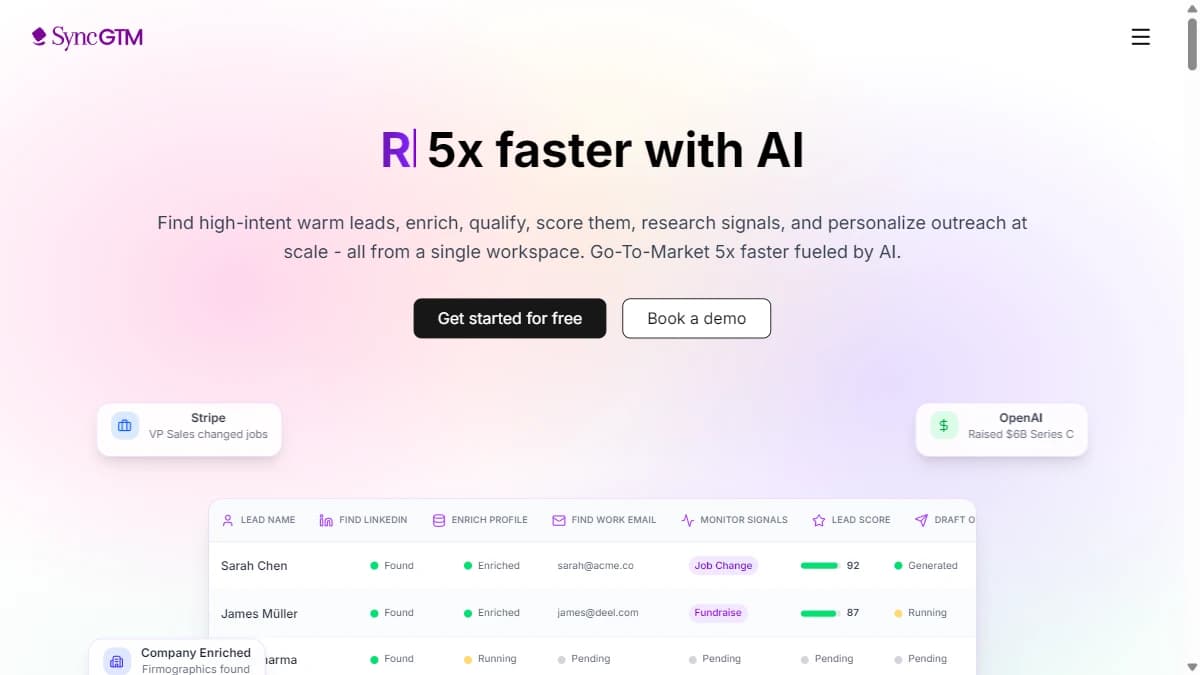
SyncGTM — Teams running Salesloft, Salesforce Sales Engagement, or both, who need the contact and account data behind those cadences to stay accurate and synced
Quick context before the head-to-head: SyncGTM isn't a third competitor here, and it isn't an engagement platform or a CRM. It's the data layer underneath whichever setup you land on below — Salesloft-plus-Salesforce or Salesforce's native Sales Engagement.
2-way Salesforce sync keeps enriched records flowing in both directions, so contact and account data stays current in the CRM instead of going stale between enrichment runs. Underneath that sync, a real-time waterfall across 50+ data providers adds 76+ data points per lead — verified email, direct phone, firmographics, and job-change or growth signals.
The AI Email Writer turns that verified data into sequence-ready copy, so whichever tool is running the cadence — Salesloft or Salesforce's native queue — starts with a draft grounded in real account context instead of a generic template. See the GTM agent library and a ready outreach workflow template for how the pieces connect, or check pricing for current plans. Now, the actual comparison.
Pros
- +2-way Salesforce sync — enriched data flows back into the CRM instead of living in a separate export
- +76+ data points per lead from a 50+ provider waterfall, refreshed at lookup rather than a static append
- +AI Email Writer drafts sequence copy from verified contact and account data, for use inside Salesloft, native Sales Engagement, or any sequencer
- +Works underneath either Salesloft-plus-Salesforce or Salesforce-only setups — not a competing engagement tool
Cons
- −Not a cadence or call-coaching tool — teams still need Salesloft or Salesforce Sales Engagement to execute sequences
- −Not a CRM — Salesforce (or another CRM) is still required as the system of record
Best for: Teams running Salesloft, Salesforce Sales Engagement, or both, who need the contact and account data behind those cadences to stay accurate and synced
Pricing: Starts at $99/mo. Free tier available.
2. Salesloft — Sales orgs where outbound execution is a dedicated motion — high call volume, multi-channel cadences, and reps who need coaching built into the workflow
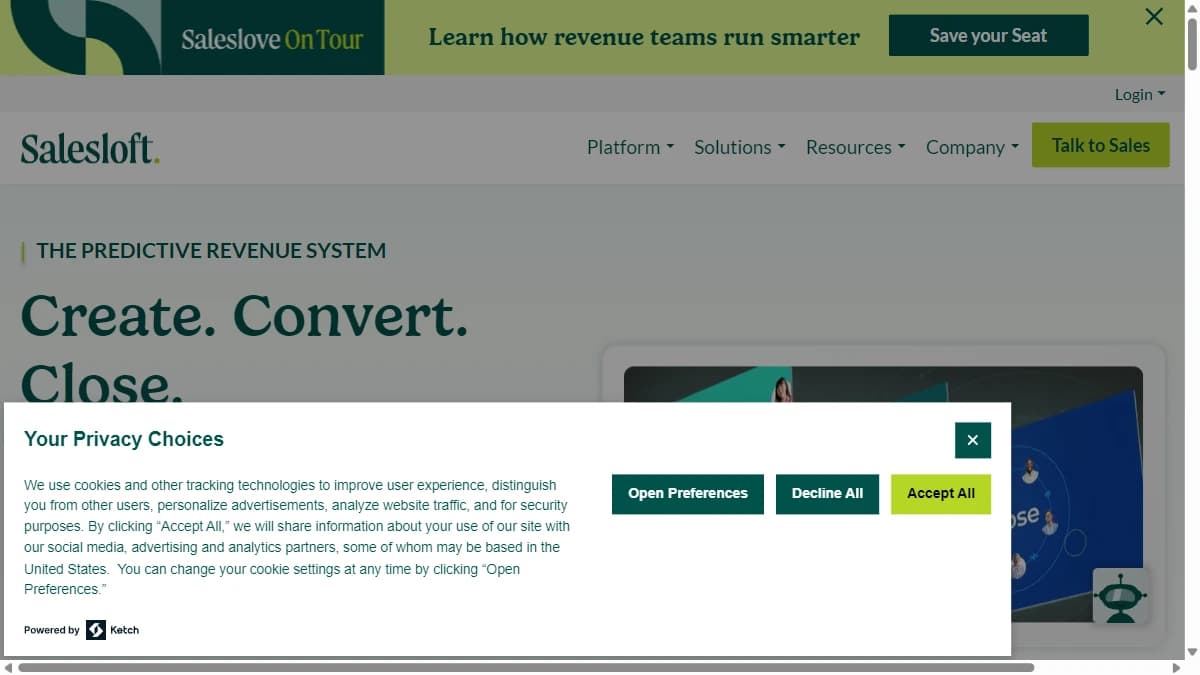
Salesloft — Sales orgs where outbound execution is a dedicated motion — high call volume, multi-channel cadences, and reps who need coaching built into the workflow
Salesloft is a sales engagement platform built around the Cadence — a structured, multi-step sequence of calls, emails, and LinkedIn touches that reps work through in a prioritized queue rather than a flat task list.
Its strength is depth on the execution side: call coaching and conversation intelligence, dynamic cadence branching based on prospect behavior, and a rep-facing workspace built specifically around outbound work rather than general record-keeping.
Salesloft syncs activity into a connected CRM — most commonly Salesforce — rather than storing pipeline and account data as its own system of record. Following the December 2025 Clari merger, the roadmap is shifting further into forecasting and revenue intelligence alongside its core engagement product.
Pros
- +Purpose-built cadence engine with multi-channel sequencing (call, email, LinkedIn) and dynamic branching
- +Strong call coaching and conversation intelligence layered directly into the rep workflow
- +Rep-facing UI designed around executing outbound work, not general CRM administration
- +Native two-way activity sync into Salesforce and other CRMs
Cons
- −Not a system of record — still requires a CRM underneath it for pipeline, accounts, and reporting
- −Adds a second platform to administer alongside Salesforce, with its own permissions and integration upkeep
- −Public self-serve pricing isn't published; cost is quoted per seat via sales, so budgeting requires a call
- −Post-merger direction is shifting toward forecasting, which may add complexity for teams that only want cadence execution
Best for: Sales orgs where outbound execution is a dedicated motion — high call volume, multi-channel cadences, and reps who need coaching built into the workflow
Pricing: Sold via annual contract with per-seat pricing quoted by sales; no public self-serve tier.
3. Salesforce — Organizations standardized on Salesforce as CRM that want cadence execution native to the platform without adding a second system
Salesforce — Organizations standardized on Salesforce as CRM that want cadence execution native to the platform without adding a second system
Salesforce is the CRM most enterprise and mid-market sales orgs run on — the system of record for accounts, contacts, opportunities, pipeline stages, and the reporting that revenue leadership pulls from.
Inside Sales Cloud, Salesforce sells its own engagement product, Sales Engagement (formerly High Velocity Sales), which covers the same core ground as Salesloft: work queues, cadences, and call/email sequencing, native to the CRM with no second system to sync.
The tradeoff is depth. Salesforce's native engagement tool is capable for straightforward cadences but doesn't match a dedicated platform's call coaching, multi-channel branching, or purpose-built rep workspace — the gap most Salesloft customers are paying to close.
Pros
- +Single system of record — no second platform to keep in sync for teams that stay fully native
- +Sales Engagement (native cadence tool) is included in relevant Sales Cloud editions rather than a separate purchase
- +Deepest CRM functionality on the market: customization via Apex, extensive integration ecosystem, mature reporting
- +One admin surface, one permission model, one vendor relationship
Cons
- −Native Sales Engagement is less specialized than a dedicated engagement platform for high-volume, multi-channel outbound
- −Steep learning curve and implementation timeline, especially at enterprise scale with custom objects and Apex logic
- −Editions and per-user pricing change and vary by tier — always confirm current figures directly with Salesforce rather than relying on older published numbers
- −Admin overhead scales with customization; deep configurations require dedicated Salesforce admin resources
Best for: Organizations standardized on Salesforce as CRM that want cadence execution native to the platform without adding a second system
Pricing: Sold in per-user/month editions that scale from entry-level to enterprise tiers; current pricing and what's included at each tier should be confirmed directly with Salesforce, since editions change.
Comparison Table
| Tool | Best For | Free Tier | Starting Price | Standout Feature |
|---|---|---|---|---|
| SyncGTM | Teams running Salesloft, Salesforce Sales Engagement, or both, who need the contact and account data behind those cadences to stay accurate and synced | Yes | $99/mo | The 2-way Salesforce data layer and AI-drafted sequence copy that neither Salesloft nor Salesforce's native tool provides on its own |
| Salesloft | Sales orgs where outbound execution is a dedicated motion — high call volume, multi-channel cadences, and reps who need coaching built into the workflow | No (demo-based sales process) | Custom quote | Purpose-built cadence and call-coaching workspace that syncs into Salesforce rather than replacing it |
| Salesforce | Organizations standardized on Salesforce as CRM that want cadence execution native to the platform without adding a second system | No (paid editions only) | Varies by edition — confirm current pricing with Salesforce | The only option here where CRM and cadence execution live in one system with no sync required |
How to Choose
- SyncGTM if you need teams running salesloft, salesforce sales engagement, or both, who need the contact and account data behind those cadences to stay accurate and synced
- Salesloft if you need sales orgs where outbound execution is a dedicated motion — high call volume, multi-channel cadences, and reps who need coaching built into the workflow
- Salesforce if you need organizations standardized on salesforce as crm that want cadence execution native to the platform without adding a second system