
By Kushal Magar · September 28, 2026 · 11 min read
Salesloft vs HubSpot: Sales Engagement vs CRM Ranked 2026
Half the teams searching "Salesloft vs HubSpot" aren't choosing between two unknown vendors — they already pay for HubSpot and want to know if $100-plus a seat more for Salesloft is worth it. That's a narrower, more useful question than "which one wins," and the answer depends on one thing: whether HubSpot's native sequences already cover your outbound motion, or your reps have outgrown them.
HubSpot Sales Hub and Salesloft get compared constantly, but they start from different places. HubSpot Sales Hub is the sales module inside a CRM suite — sequences, deals, contacts, and reporting all live on the same record, with no second system to keep in sync. Salesloft is a dedicated sales engagement platform built around the Cadence: a standalone tool that plugs into whatever CRM you already run, HubSpot included, and syncs activity back into it.
The real question for most mid-market teams isn't "CRM or engagement platform" — they already own the CRM. It's whether HubSpot's native sequences, included in the Sales Hub they're already paying for, are good enough to skip adding Salesloft as a second line item. That's a genuine tradeoff, not a foregone conclusion: HubSpot's sequences are real, tied directly to the deal record, and have gotten more capable every year. Salesloft's sequences go deeper — dynamic branching, multi-channel cadences across call and LinkedIn, and coaching built into the rep workflow — because that's the one thing the product does. One more shift worth knowing before you evaluate either: Clari and Salesloft completed a merger in December 2025, and the combined company is now leaning into forecasting and "predictive revenue" alongside its cadence product — worth factoring in if you're buying Salesloft for sequencing alone.
For a deeper look at either vendor on its own, see our Salesloft review and HubSpot review. Below: where HubSpot's native sequences top out, what Salesloft adds on top, and the actual per-seat math for a team deciding whether to add it.
Quick Summary
"Salesloft vs HubSpot" usually gets framed as a head-to-head, but for most searchers it's really a budget question: we already pay for HubSpot Sales Hub, so do we need to add Salesloft on top? HubSpot Sales Hub is a CRM suite — contacts, deals, pipeline, and sequences all live on the same record. Basic automated outreach is available starting at the Starter tier ($7/seat/mo billed annually, $20/seat/mo monthly), with fuller sequence customization and workflow automation named explicitly at Professional ($90/seat/mo billed annually, $100/seat/mo monthly, plus a one-time $1,500 onboarding fee). That's a real, usable cadence tool for teams running single-channel email sequences tied directly to the deal, with no second system to administer. Salesloft is a different kind of product: a dedicated sales engagement platform built entirely around the Cadence — multi-channel sequences spanning email, calls, and LinkedIn steps, with dynamic branching based on prospect behavior and call coaching built into the rep workflow. It doesn't store pipeline or deal history itself; it syncs activity into whatever CRM sits underneath it, HubSpot included. Salesloft doesn't publish list pricing — it's sold via annual contract with per-seat pricing quoted by sales — so comparing it against HubSpot's transparent tiers means getting a real quote first. The decision that actually matters for a mid-market team: if HubSpot's native sequences already cover your outbound motion, adding Salesloft is a second system and a second bill for capability you may not use. If reps are hitting HubSpot's ceiling — no multi-channel branching, thin call coaching, sequences that feel like an afterthought next to the CRM — Salesloft is a real upgrade, not a rebrand of the same feature. Neither tool fixes the data feeding those sequences. SyncGTM sits underneath either stack with 2-way HubSpot sync, so enriched records flow both directions instead of going stale between exports, plus a real-time waterfall that adds verified emails, direct phones, and up to 15 intent signals per lead — context a rep needs before the first email in either tool's sequence goes out.
TL;DR
- Short answer: HubSpot Sales Hub's native sequences are good enough for teams running straightforward, single-channel outbound tied to the deal record. Salesloft is a dedicated cadence engine for teams that have outgrown that ceiling.
- The real overlap: both run multi-step sequences — the gap is depth: multi-channel branching, call coaching, and a rep workspace built only for outbound execution.
- Pick HubSpot Sales Hub's native sequences if you want one system, one bill, and sequencing that never leaves the CRM record.
- Pick Salesloft if outbound is a dedicated motion — high call volume, multi-channel cadences, reps who need coaching built into the workflow.
- SyncGTM is not a third competitor in this fight — it's the data layer underneath either setup, with 2-way HubSpot sync, a 50+ provider waterfall, and up to 15 intent signals per lead.
What We Evaluated
- Whether the product is a dedicated engagement platform or a CRM suite with sequencing as one feature among many
- Where HubSpot's native sequences hit a ceiling versus Salesloft's dedicated cadence engine
- Per-seat pricing transparency, and which tier actually gates full sequence functionality
- Multi-channel sequencing depth: email, call, and LinkedIn steps, plus dynamic branching
- Call coaching and conversation intelligence built into the rep workflow versus bolted on
- Reporting depth, especially Salesloft's post-Clari-merger shift toward forecasting
1. SyncGTM — Teams running HubSpot Sales Hub, Salesloft, or both, who need the contact and account data behind those sequences to stay current and synced
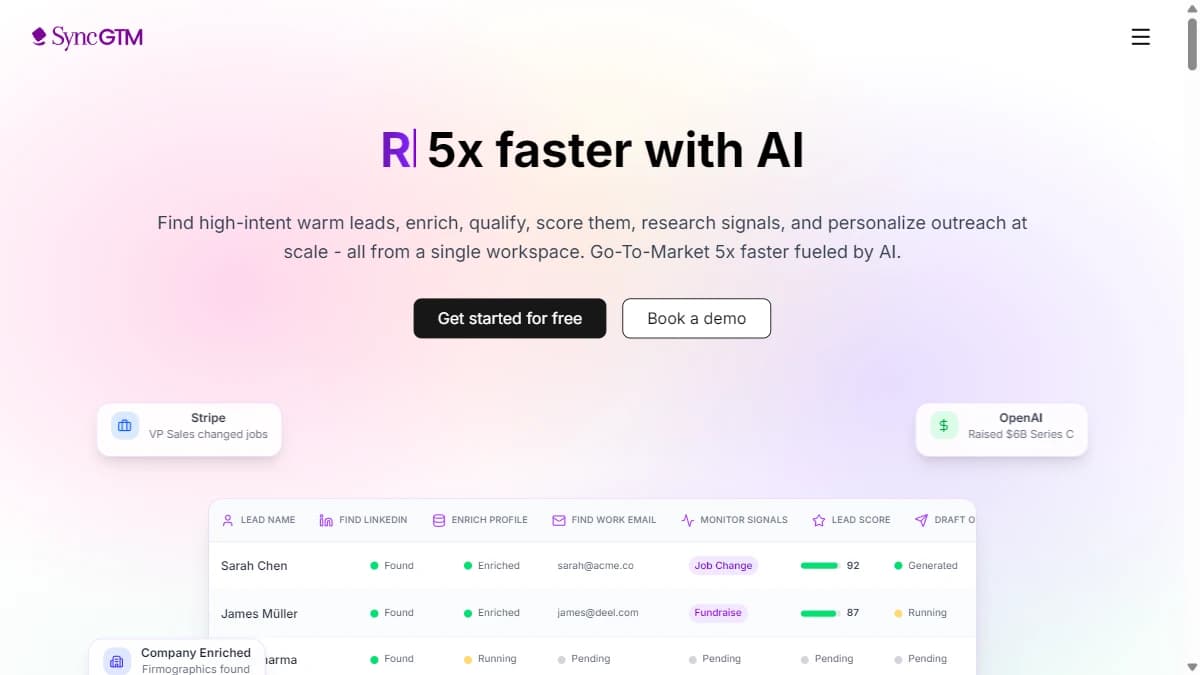
SyncGTM — Teams running HubSpot Sales Hub, Salesloft, or both, who need the contact and account data behind those sequences to stay current and synced
Quick context before the head-to-head: SyncGTM isn't a third competitor here — it isn't a sales engagement platform and it isn't a CRM. It's the data layer underneath whichever setup you land on below: HubSpot Sales Hub on its own, or HubSpot paired with Salesloft.
2-way HubSpot sync keeps enriched records flowing in both directions, so contact and account data stays current inside the CRM instead of drifting out of date between enrichment runs. Underneath that sync, a real-time waterfall across 50+ data providers adds 76+ data points per lead — verified email, direct phone, firmographics, and up to 15 intent signals that flag which accounts are actually in-market.
Those signals feed whichever sequencer is running the outbound motion — HubSpot's native sequences or Salesloft's Cadence — so reps start with a prioritized, enriched list instead of a stale import. See how the sync works or check pricing for current plans. Now, the actual comparison.
Pros
- +2-way HubSpot sync — enriched data flows back into deal and contact records instead of a one-way export
- +76+ data points per lead from a 50+ provider waterfall, including up to 15 intent signals for account prioritization
- +Feeds either HubSpot's native sequences or Salesloft's Cadence — not tied to one engagement tool
- +Keeps records current for teams still deciding whether they need a second engagement platform at all
Cons
- −Not a sequencing or call-coaching tool — teams still need HubSpot Sales Hub or Salesloft to execute cadences
- −Not a CRM — HubSpot (or another CRM) is still required as the system of record
Best for: Teams running HubSpot Sales Hub, Salesloft, or both, who need the contact and account data behind those sequences to stay current and synced
Pricing: Starts at $99/mo. Free tier available.
2. Salesloft — Teams that have outgrown HubSpot's native sequences — high call volume, multi-channel cadences, and reps who need coaching built into the workflow
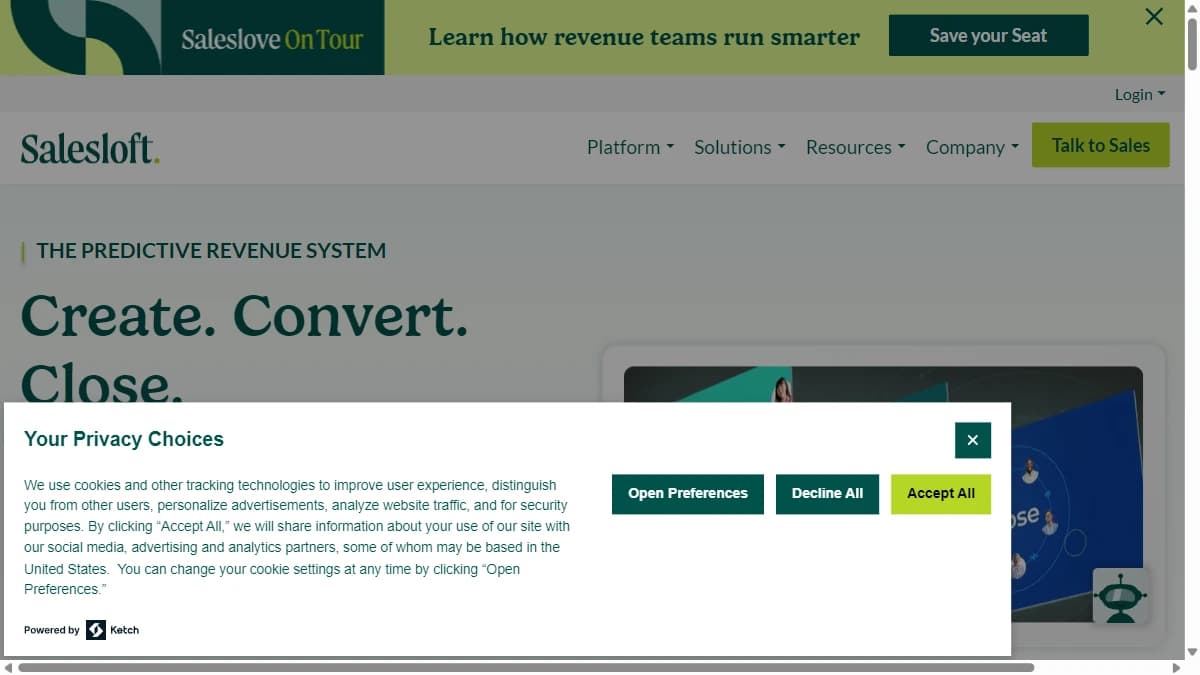
Salesloft — Teams that have outgrown HubSpot's native sequences — high call volume, multi-channel cadences, and reps who need coaching built into the workflow
Salesloft is a dedicated sales engagement platform built around the Cadence — a structured, multi-step sequence of calls, emails, and LinkedIn touches that reps work through in a prioritized queue instead of a flat to-do list.
Its depth shows up on the execution side: dynamic cadence branching based on prospect behavior, conversation intelligence and call coaching built into the rep workflow, and a UI designed specifically around outbound execution rather than general CRM administration.
Salesloft doesn't store pipeline or account data itself — it syncs activity into a connected CRM, HubSpot included. Following the December 2025 Clari merger, the roadmap is extending further into forecasting and revenue intelligence alongside the core cadence product.
Pros
- +Purpose-built cadence engine with multi-channel sequencing (call, email, LinkedIn) and dynamic branching HubSpot's native sequences don't match
- +Conversation intelligence and call coaching layered directly into the rep workflow
- +Rep-facing UI built around executing outbound work, not general CRM record-keeping
- +Native two-way activity sync into HubSpot and other CRMs
Cons
- −Adds a second platform to administer and pay for on top of HubSpot Sales Hub, with its own permissions and integration upkeep
- −No public self-serve pricing — cost is quoted per seat via sales, so budgeting requires a call before you can compare it to HubSpot's published tiers
- −Not a system of record — still requires a CRM underneath it for pipeline and reporting
- −Post-merger direction is shifting toward forecasting, which may add complexity for teams that only want cadence execution
Best for: Teams that have outgrown HubSpot's native sequences — high call volume, multi-channel cadences, and reps who need coaching built into the workflow
Pricing: Sold via annual contract with per-seat pricing quoted by sales; no public self-serve tier.
3. HubSpot Sales Hub — Teams standardized on HubSpot as CRM who want sequencing native to the platform without adding a second system
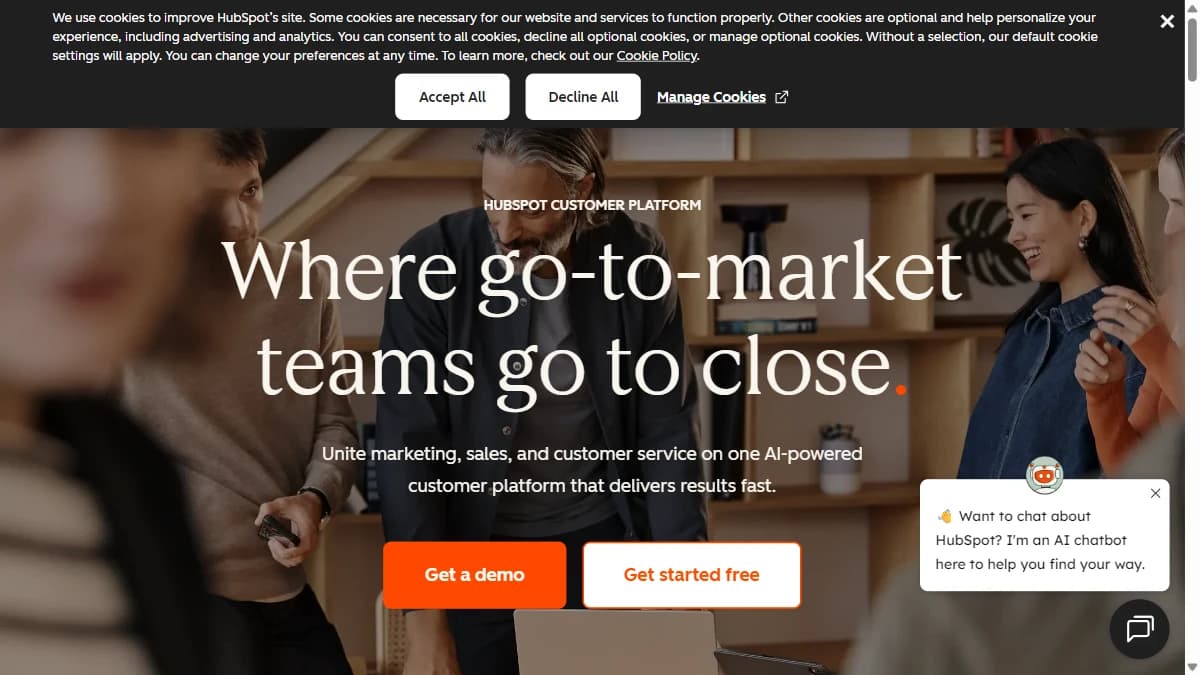
HubSpot Sales Hub — Teams standardized on HubSpot as CRM who want sequencing native to the platform without adding a second system
HubSpot Sales Hub is the sales module of HubSpot's CRM suite — sequences, deals, contacts, and reporting all live on the same record, so there's no second system to sync for teams that stay fully native.
Sequences are a named feature starting at the Starter tier ($7/seat/mo billed annually, $20/seat/mo monthly) with basic automated outreach, and fuller workflow automation and sequence customization surfaced at Professional ($90/seat/mo billed annually, $100/seat/mo monthly, plus a one-time $1,500 onboarding fee).
The tradeoff is depth. HubSpot's sequences are genuinely useful for single-channel, straightforward outbound tied to the deal record, but they don't match a dedicated platform's multi-channel branching, call coaching, or purpose-built rep workspace — the gap that pushes some teams toward Salesloft once outbound volume grows.
Pros
- +Sequences, deals, and contacts live on one record — no second system or sync layer for teams that stay fully native
- +Transparent, published per-seat pricing across Starter, Professional, and Enterprise tiers
- +One admin surface and one vendor relationship instead of managing two connected platforms
- +Deep integration with HubSpot's marketing and service tools for teams running the full suite
Cons
- −Native sequences are single-channel and less specialized than a dedicated engagement platform's multi-channel, branching cadences
- −Full sequence customization and workflow automation are gated at Professional, a meaningful jump from Starter pricing
- −Professional and Enterprise tiers carry mandatory onboarding fees ($1,500 and $3,500 respectively) on top of per-seat cost
- −Conversation intelligence and call coaching are thinner than what a dedicated engagement platform offers
Best for: Teams standardized on HubSpot as CRM who want sequencing native to the platform without adding a second system
Pricing: Free tier available. Starter from $7/seat/mo billed annually ($20/seat/mo monthly). Professional $90/seat/mo billed annually ($100/seat/mo monthly), plus a one-time $1,500 onboarding fee. Enterprise $150/seat/mo billed annually, plus a one-time $3,500 onboarding fee.
Comparison Table
| Tool | Best For | Free Tier | Starting Price | Standout Feature |
|---|---|---|---|---|
| SyncGTM | Teams running HubSpot Sales Hub, Salesloft, or both, who need the contact and account data behind those sequences to stay current and synced | Yes | $99/mo | 2-way HubSpot sync and up to 15 intent signals per lead that neither HubSpot's native sequences nor Salesloft provide on their own |
| Salesloft | Teams that have outgrown HubSpot's native sequences — high call volume, multi-channel cadences, and reps who need coaching built into the workflow | No (demo-based sales process) | Custom quote | Purpose-built cadence and call-coaching workspace for teams where outbound execution is a dedicated motion, not a CRM feature |
| HubSpot Sales Hub | Teams standardized on HubSpot as CRM who want sequencing native to the platform without adding a second system | Yes | $0 (paid tiers from $7/seat/mo billed annually) | The only option here where CRM and sequencing live in one system with no sync required, at transparent published pricing |
How to Choose
- SyncGTM if you need teams running hubspot sales hub, salesloft, or both, who need the contact and account data behind those sequences to stay current and synced
- Salesloft if you need teams that have outgrown hubspot's native sequences — high call volume, multi-channel cadences, and reps who need coaching built into the workflow
- HubSpot Sales Hub if you need teams standardized on hubspot as crm who want sequencing native to the platform without adding a second system