
By Kushal Magar · September 28, 2026 · 12 min read · Last updated: September 30, 2026
Salesloft vs Gong: Engagement or Revenue Intelligence 2026
Salesloft vs Gong gets framed like a head-to-head because both show up in the same buying committee, but they're built to do different jobs: Salesloft runs the outbound motion — cadences, dialer, email, deal management — and Gong analyzes the calls that motion produces. The overlap isn't a myth, though. Both now sell forecasting and deal inspection, Gong has pushed into engagement with Gong Engage, and Salesloft has its own conversation intelligence. The real question isn't "which wins" — it's which one your team needs first, and what breaks if you only run one.
Salesloft and Gong land in the same comparison searches because they sell into the same buying committee — VP of Sales, RevOps, sometimes the CRO — and both get pitched as "revenue platforms" in 2026. But they start from different jobs. Salesloft is a sales engagement platform: it sequences outbound touches (email, calls, LinkedIn steps) into a Cadence, gives reps a prioritized queue, and logs that activity back into the CRM. Gong is a revenue intelligence platform: it records and transcribes sales calls, analyzes deals and pipeline for risk, and rolls that signal up into forecasting and coaching.
Put simply: Salesloft is upstream — it generates the activity. Gong is downstream — it analyzes what came out of that activity, plus whatever else touches the deal (calls booked outside Salesloft, meetings, emails threaded through the CRM). A lot of teams run both, and that's not vendor bloat — it's two different layers of the same motion.
Where this gets genuinely confusing is the overlap, and it's worth naming directly instead of glossing over it: Gong sells forecasting and deal-risk scoring that competes with what RevOps might otherwise build around Salesloft's activity data, and Gong Engage extends into cadence and sequencing — Gong's own answer to "what do I do about what I just heard on this call." Salesloft, for its part, has its own conversation intelligence (call recording, transcription, coaching) baked into the platform, which competes with Gong's core product on the call-analysis side. Following the Clari-Salesloft merger that closed in December 2025, Salesloft's roadmap is also leaning further into forecasting. Neither company is staying in its lane. For a closer look at either vendor on its own, see our Salesloft review and Gong review. If you're evaluating Salesloft against a peer engagement platform instead of an intelligence layer, see our Salesloft vs Outreach comparison.
Quick Summary
"Salesloft vs Gong" reads like a head-to-head, but the two products solve different problems and most scaled revenue teams eventually pay for both. Salesloft is a sales engagement platform — it builds and runs multi-step outbound cadences across email, calls, and LinkedIn, gives reps a prioritized work queue, and syncs that activity into the CRM. Gong is a revenue intelligence platform — it records and transcribes calls, surfaces deal risk and buyer signal from conversations, and rolls that analysis up into forecasting and rep coaching. One generates outbound activity; the other analyzes the calls and deals that activity (and everything else touching the account) produces. The overlap is real: Gong sells its own forecasting and deal-inspection tools that compete with what RevOps might otherwise build on Salesloft's activity data, Gong Engage adds cadence and sequencing on top of Gong's call analysis, and Salesloft ships its own conversation intelligence and coaching features. Post-merger with Clari, Salesloft is also pushing further into forecasting. So the honest sequencing question is: which do you need first? Teams without a repeatable outbound motion — early-stage, or scaling a new segment — get more immediate value from Salesloft, because there isn't enough call volume yet to make conversation analytics worth the spend. Teams that already have volume (inbound-heavy, PLG-led, or an established outbound org) and are flying blind on what's actually happening inside calls and deals get more value from Gong first. Teams that run both can connect them, since Gong imports Salesloft call recordings for transcription and analysis. Neither vendor publishes pricing: Salesloft quotes per-seat annual contracts, and Gong prices licenses per user plus a platform fee based on the number of users.
TL;DR
- Short answer: Salesloft and Gong aren't straight substitutes. Salesloft is sales engagement (cadences, dialer, email, deal management); Gong is revenue intelligence (call recording, conversation analytics, deal and forecast signal). Most teams that scale end up running both.
- The real overlap: both now sell forecasting and deal inspection, Gong has pushed into engagement with Gong Engage, and Salesloft has its own conversation intelligence — the lines are blurring, not fixed.
- Buy Salesloft first if you don't yet have a repeatable outbound motion — you need volume and consistency in activity before you have enough call data worth analyzing.
- Buy Gong first if outbound volume already exists (inbound-led, PLG, or an established team) and the gap is visibility into what's happening inside calls and deals, not activity volume.
- If you can only run one, you get either the motion or the analysis of the motion — not both. Most mid-market and enterprise revenue teams eventually need both layers.
- Running both is a supported setup: Gong connects to Salesloft and imports its call recordings for transcription and analysis — just decide which tool owns recording and coaching so you don't pay for conversation intelligence twice.
What We Evaluated
- What job the product actually does — generating outbound activity, or analyzing calls and deals after they happen
- Where each vendor's roadmap has moved into the other's territory (Gong Engage, Salesloft conversation intelligence, both selling forecasting)
- Call recording and consent handling — jurisdictional requirements and how each vendor supports compliant recording
- Which one delivers value first depending on team maturity and motion (outbound-led vs. volume-already-exists)
- Coaching depth: cadence-adherence coaching (Salesloft) vs. call-content coaching (Gong)
- Forecasting: activity-based signal (Salesloft/Clari) vs. conversation-based deal-risk signal (Gong)
- How the two connect when you run both, and where that duplicates spend on conversation intelligence
1. Salesloft — Teams that don't yet have a repeatable outbound motion and need to generate consistent activity first — early-stage or scaling into a new segment
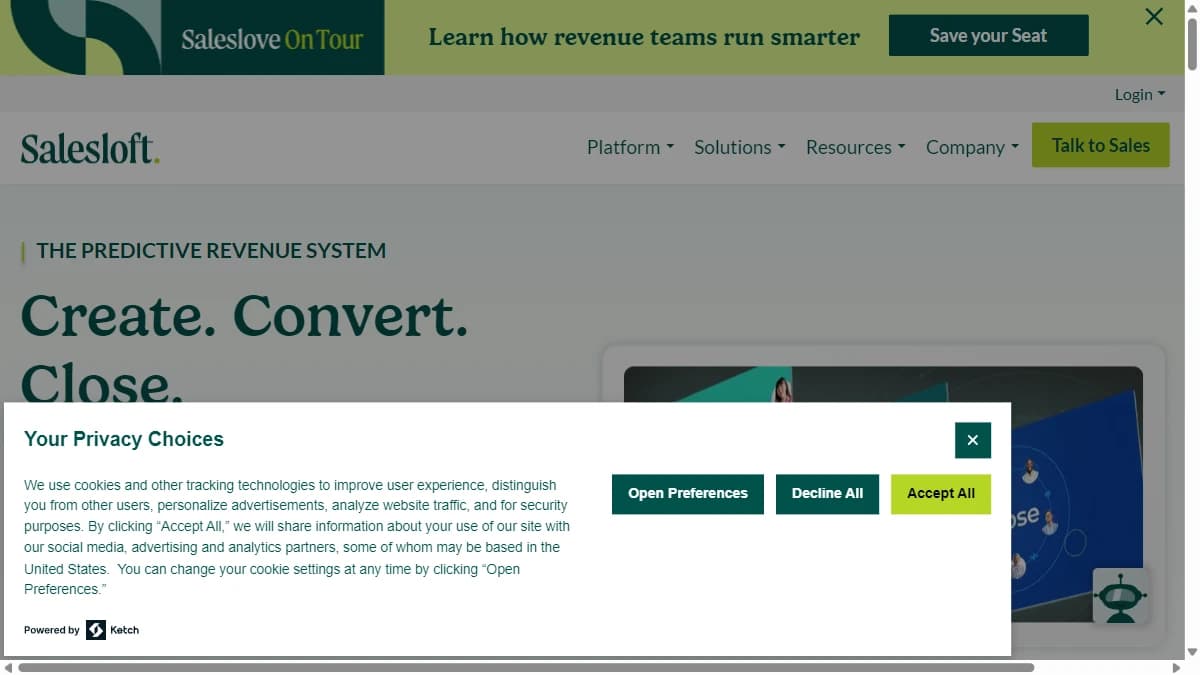
Salesloft — Teams that don't yet have a repeatable outbound motion and need to generate consistent activity first — early-stage or scaling into a new segment
Salesloft is a sales engagement platform built around the Cadence — a structured, multi-step sequence of calls, emails, and LinkedIn touches that reps work through in a prioritized queue.
It's the layer that generates outbound activity: dialer, email sends, deal management, and dynamic cadence branching based on prospect behavior. Rhythm, its signal-to-action engine, ranks what each rep should work next, and activity syncs back into a connected CRM — Salesforce, HubSpot, and Microsoft Dynamics are supported natively.
Salesloft has its own conversation intelligence built in — call recording, transcription, and coaching, with live transcription and real-time battlecards added in its Summer 2026 update — which overlaps with part of what Gong does. Following the December 2025 Clari merger, the roadmap is also pushing further into forecasting and pipeline prediction through Clari Forecast, Deals, and Inspect.
Pricing isn't published; Salesloft sells annual per-seat contracts quoted through sales. For teams that also run Gong, Gong's Salesloft integration imports Salesloft call recordings into Gong for transcription and analysis — the usual way the two are connected.
Pros
- +Purpose-built cadence engine with multi-channel sequencing (call, email, LinkedIn) and dynamic branching
- +Generates the outbound activity that revenue intelligence tools need volume of before analysis is useful
- +Built-in conversation intelligence and coaching, reducing the need for a second tool at smaller scale
- +Native CRM integrations with Salesforce, HubSpot, and Microsoft Dynamics
Cons
- −Not a system of record — still requires a CRM underneath it for pipeline, accounts, and reporting
- −Conversation intelligence is less specialized than a dedicated tool like Gong for deep call analytics at scale
- −Public self-serve pricing isn't published; cost is quoted per seat via sales
- −Post-merger direction shifting toward forecasting, which may add platform complexity for teams that only want cadence execution
Best for: Teams that don't yet have a repeatable outbound motion and need to generate consistent activity first — early-stage or scaling into a new segment
Pricing: Sold via annual contract with per-seat pricing quoted by sales; no public self-serve tier.
2. Gong — Teams with existing call and deal volume — inbound-led, PLG, or an established outbound org — that need visibility into what's happening inside conversations and deals

Gong — Teams with existing call and deal volume — inbound-led, PLG, or an established outbound org — that need visibility into what's happening inside conversations and deals
Gong is a revenue intelligence platform — it now positions itself as a "Revenue AI OS" and says it's trusted by 5,000+ customers — built around recording, transcribing, and analyzing sales calls and deals: surfacing what's actually being said, where deals are at risk, and what separates winning calls from losing ones.
Its strength is analysis depth: AI-generated call summaries, objection and competitor mention detection, deal-risk scoring, and forecasting built on conversation-derived signal rather than just activity counts or rep-entered CRM fields.
Gong Engage extends the platform into cadence and sequencing — Flows, AI Composer, AI Tasker, and a built-in dialer — positioned as turning customer conversations into personalized outreach and next-best actions. That puts it in direct competition with part of what Salesloft does, on top of Gong's core call-analysis product.
The wider platform also includes Gong Forecast, Gong Enable, and Gong Agents. Pricing isn't published: according to Gong's pricing page, licenses are priced per user, with a platform fee based on the number of users supported, and prospects receive a customized proposal.
Pros
- +Conversation analytics is Gong's core strength: call summaries, objection detection, competitor mentions, deal-risk signal
- +Forecasting built on what's actually said in deals, not just logged activity or rep-entered stage changes
- +Coaching grounded in call content — what reps say and how buyers respond, not just cadence adherence
- +Gong Engage adds Flows, AI Composer, and a dialer on top of call analysis for teams that want one vendor
Cons
- −Analysis is only as valuable as the call and deal volume feeding it — less useful for teams without an established motion yet
- −Not built to generate outbound activity the way a dedicated engagement platform is, even with Gong Engage added
- −No public pricing — per-user licenses plus a platform fee, quoted as a customized proposal
- −Call recording requires jurisdiction-aware consent handling — a compliance responsibility, not just a toggle
Best for: Teams with existing call and deal volume — inbound-led, PLG, or an established outbound org — that need visibility into what's happening inside conversations and deals
Pricing: Quote-based: per-user licenses plus a platform fee based on the number of users supported; Gong does not publish list pricing.
Comparison Table
| Tool | Best For | Free Tier | Starting Price | Standout Feature |
|---|---|---|---|---|
| Salesloft | Teams that don't yet have a repeatable outbound motion and need to generate consistent activity first — early-stage or scaling into a new segment | No (demo-based sales process) | Custom quote | The engine that generates the outbound activity a revenue intelligence tool needs before its analysis is worth much |
| Gong | Teams with existing call and deal volume — inbound-led, PLG, or an established outbound org — that need visibility into what's happening inside conversations and deals | No (demo-based sales process) | Custom quote | Conversation-derived deal and forecast signal, for teams that already have call volume worth analyzing |
How to Choose
- Salesloft if you need teams that don't yet have a repeatable outbound motion and need to generate consistent activity first — early-stage or scaling into a new segment
- Gong if you need teams with existing call and deal volume — inbound-led, PLG, or an established outbound org — that need visibility into what's happening inside conversations and deals
Final Verdict
Buy Salesloft first if your problem is activity: you don't yet have a repeatable outbound motion, reps work lists by hand, and there isn't enough call volume for conversation analytics to tell you much. Salesloft builds the motion, and its built-in conversation intelligence covers recording and basic coaching until volume justifies a dedicated analysis layer.
Buy Gong first if your problem is visibility: pipeline already exists — inbound-led, PLG, or an established outbound team — but leaders can't see what's happening inside calls and deals, forecasts lean on rep-entered stages, and coaching is guesswork. Gong's conversation-derived deal and forecast signal is built for that, and Gong Engage can cover lighter sequencing needs until you need a dedicated cadence engine.
The deciding factors are call volume and where the pain sits — generating activity or understanding it. Most mid-market and enterprise revenue teams end up running both, connected through Gong's Salesloft integration; when you do, pick one tool to own recording and coaching so you aren't paying for conversation intelligence twice.
Whichever layer you buy first, SyncGTM can strengthen the enrichment behind it with verified emails, phone numbers, and firmographics from 50+ providers.